

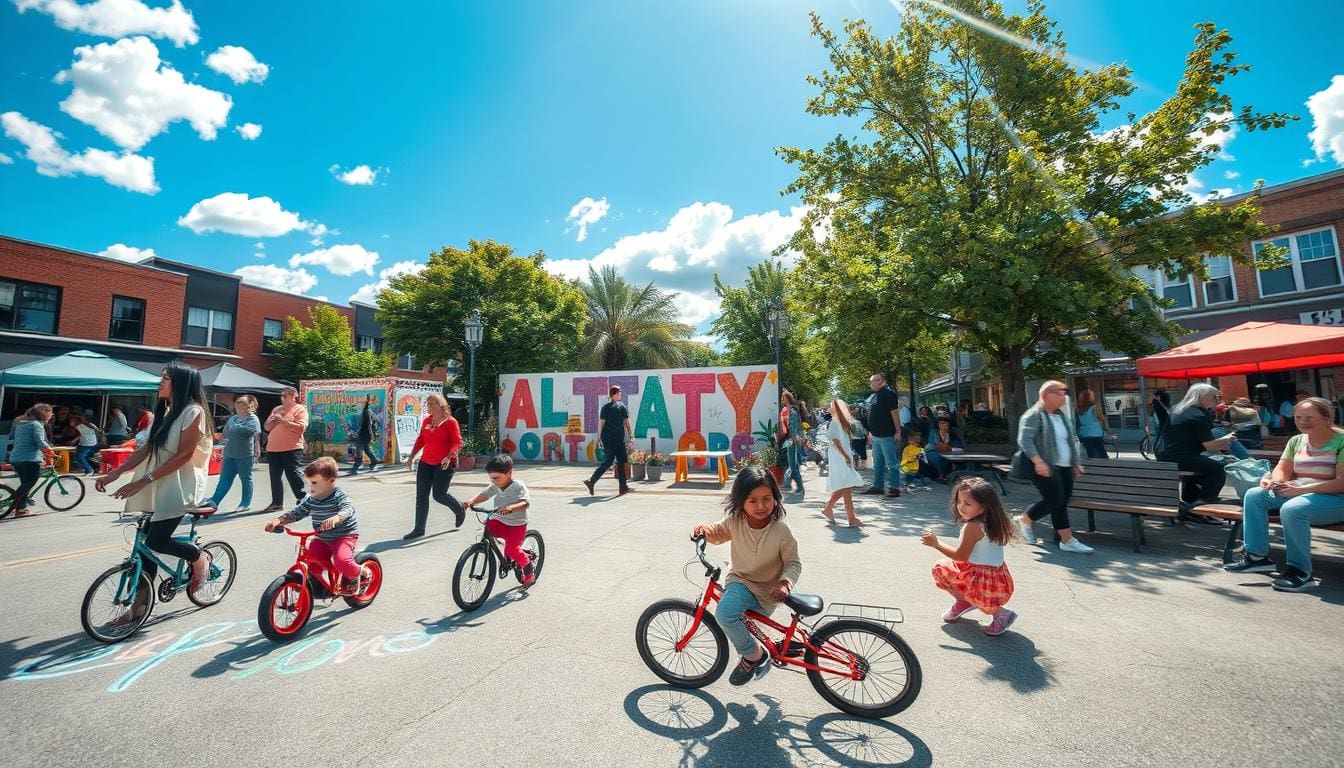
Creating spaces for community engagement is key in today’s cities. Temporary car-free blocks let people use streets for fun. In St. Paul and Minneapolis, these efforts change neighborhoods, bringing neighbors together, promoting outdoor fun, and contributing to the community-wide physical wellness tracked by HealthScope.
To start such a project, knowing local permit rules is vital. In St. Paul, a petition from 60% of a block’s residents is needed for a block party permit. Minneapolis requires 75%. This step meets city rules and gains community support, addressing concerns early.
Barricades are also key to closing streets. St. Paul charges about $150 for them, while Minneapolis includes this in their permit fee, which is $25 to $200. Some libraries and district councils in St. Paul offer free or low-cost barricade rentals. Soon, a “Play Street Kit” with barricades, signs, and games will be available for borrowing, helping residents host events.
Talking to neighbors through conversations, flyers, or kickoff meetings can make an event a beloved tradition. This teamwork not only makes the event better but also strengthens neighborhood bonds, making the area more welcoming and lively.
For more info on similar projects, visit Open Streets Hamilton. It shows how car-free events can benefit communities.
Pop‑Up Equipment and Safety
Pop-up equipment and safety are vital for outdoor play streets. These areas let kids play actively while staying safe. It’s important to focus on a few key things to make it fun and safe.
First, strong barricades are needed to keep cars out. This stops accidents and lets kids play without worrying about traffic. Also, clear signs like “No Thru Traffic” help guide drivers and reduce confusion.
Having different play equipment is also key. Things like playground balls, hula hoops, and sprinklers get kids moving and playing together. These activities help kids stay active and build friendships.
Cleaning up after the event is also important. It keeps the area tidy and teaches kids about responsibility. In St. Paul, they made cleanup fun by challenging kids to collect broken water balloons.
Watching over younger kids is also a must. Having adults around keeps them safe while they play. Setting up a way to communicate in emergencies, like walkie-talkies, adds to safety.
When everyone works together on safety, outdoor play streets become a safe place. Kids can bike, run, and play without the usual road dangers. With good planning, these events become a highlight of the community, promoting activity and togetherness.

Inclusive Games and Art
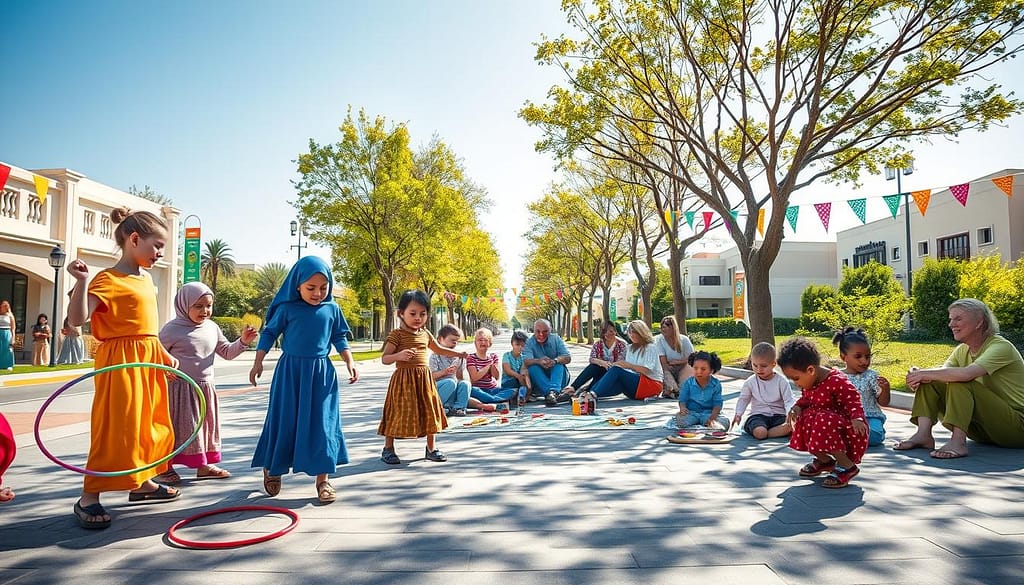
Outdoor Play Streets turn asphalt into a vibrant canvas. Everyone, no matter their age or ability, is invited to join. In St. Paul, events like water balloon fights and chalk art were big hits. There was also tie-dye T-shirt making, yard sign art galleries, and mini soccer fields.
A micro-grant from the Union Park District Council helped with art supplies. This led to a neighborhood art gallery of DIY yard signs. Front lawns became outdoor exhibits, boosting creativity and community spirit.
Chalk drawing is a favorite among kids. They draw colorful pictures that last long after the event. Tie-dye stations and water balloon tosses bring adults into the fun too. This mix of activities makes sure everyone, from toddlers to seniors, has a good time.
These ideas are all about tactical urbanism. They’re quick, creative ways to make streets more people-friendly. By having different activities, everyone feels included and valued.
| Activity | Age Group | Materials Needed | Community Engagement |
|---|---|---|---|
| Water Balloon Toss | All Ages | Water balloons | High |
| Chalk Art | Children | Chalk | Medium |
| Tie-Dye T-Shirts | Teens & Adults | Tie-dye kits | High |
| Yard Sign Art Gallery | All Ages | Art supplies | High |
| Mini Soccer Fields | Children | Soccer balls | Medium |
Counting Participation and Surveys
Counting the number of participants in outdoor play streets can show their impact on the community. To keep these programs going, organizers need to collect data. They can use simple methods like head counts, sign-in sheets, or clicker tallies. These numbers are key for showing success to funders and city officials.
Surveys, whether on paper or online, give insights into what people think. They help find out what works and what doesn’t. In St. Paul, for example, about 40% of households on certain blocks had kids. This was compared to just 20% in the wider area. This data showed the need for safe play areas.
This evidence is very important when asking for grants, getting permits, or pushing for policy changes that support open streets. Even simple questions, like what people enjoyed most, can help. By starting to evaluate early on, organizers can make a strong case for making the program permanent.
From Pilot to Monthly Series
Turning a one-time event into a regular occurrence needs careful planning and community support. The St. Paul Play Street program started with monthly events in summer 2021. By 2022, it became a weekly tradition. This shows how outdoor play streets can become a big part of neighborhood life.
There are four main challenges in keeping these events going: finding money, dealing with community resistance, getting past red tape, and avoiding volunteer burnout. Overcoming these hurdles is key to success. Getting local people involved in planning builds trust and makes events more relevant to the community.
Using tactical urbanism helps organizers create low-cost, temporary solutions that change based on community feedback. This ability to adapt is critical for keeping events interesting and people involved. In St. Paul, different funding sources like city budgets and local business sponsorships help keep the program going.
Good communication is essential for addressing neighbors’ concerns. Talking openly can ease worries and encourage more people to join in. Keeping volunteers engaged is also important. By sharing tasks and celebrating small wins, you can keep the excitement alive.
With each event, outdoor play streets become a beloved tradition in the neighborhood. This change not only makes the area safer but also strengthens social bonds. For those looking to start similar projects, looking at successful examples like the Houston Slow Streets pilot can offer useful tips and results.