
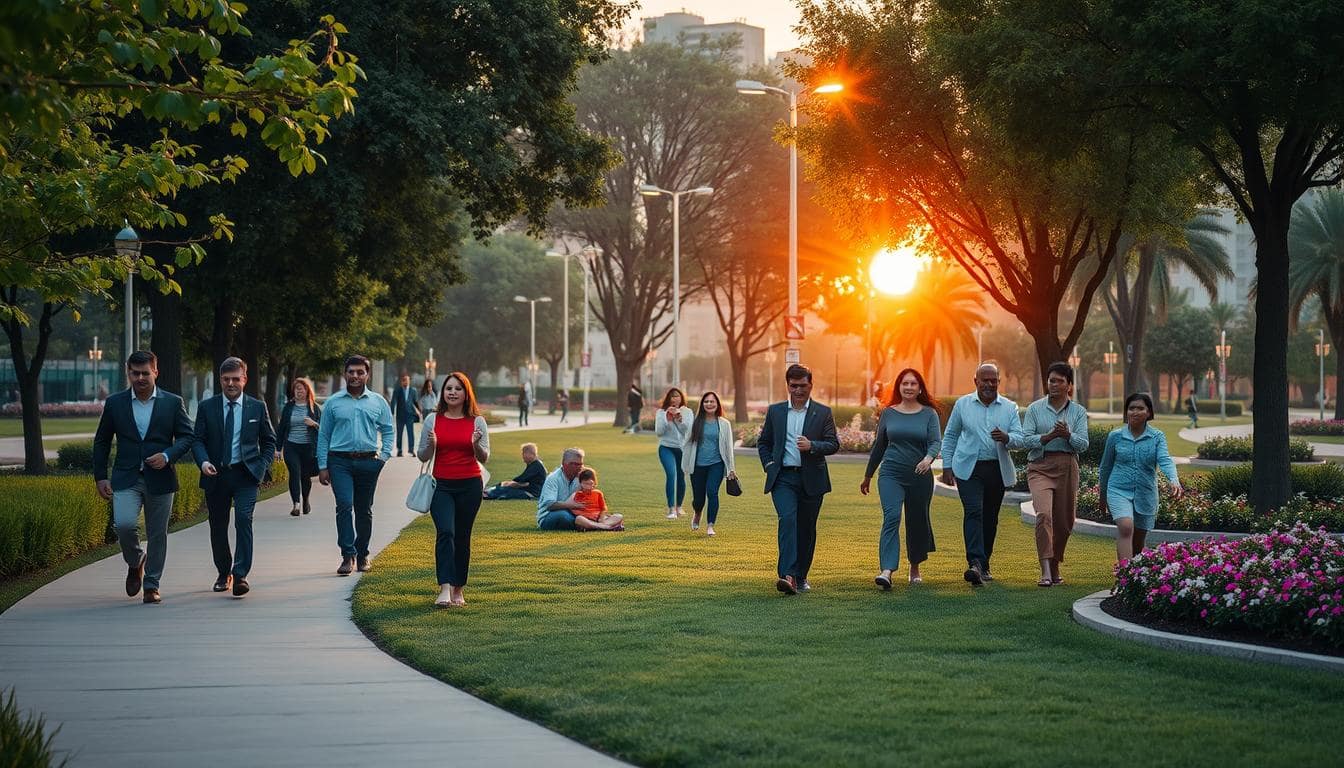
In today’s fast world, a safe and welcoming place is key. This article looks at what makes a city great. We’ll see how good lighting, nice parks, and checking transit can make a big difference.
Lighting does more than just light up the way. It makes people feel safe. When places are well-lit, folks are more likely to enjoy the outdoors. This is good for staying active and healthy.
Parks are the heart of our communities. They offer places for rest and fun. Keeping them nice encourages people to get out and be active. Also, checking transit helps make sure it’s easy to use.
Let’s dive deeper into these topics. We’ll see how they all come together to make our community safer and more lively.
Forming a Walk Audit Team
To make a walk audit successful, you need a diverse and active team. This team is key to your Community Safety Walks. They will give you important insights about the area. First, decide what you want to achieve: Do you want to engage the community, evaluate the area technically, or push for quick changes?
Make sure your team has a variety of viewpoints. Include:
- Neighborhood residents who know the area well
- City transportation planners who know about roads and paths
- Parks and recreation staff who take care of local parks
- Local elected officials who control money and policies
- Community organization members who speak up for local issues
Keep your team small for better conversations. Aim for 15 people or less for community walks. If more people want to join, plan more walks or groups.
Choosing a good leader is important. Pick someone who knows the tools and can lead discussions. They will make sure everyone gets a chance to share their thoughts.
Building a strong walk audit team is the first step to success. With different views, you can find out what makes streets safe and easy for everyone.
| Team Member Type | Role | Importance |
|---|---|---|
| Neighborhood Residents | Provide local insights | High |
| City Planners | Offer technical knowledge | High |
| Parks Staff | Manage park facilities | Medium |
| Elected Officials | Facilitate funding and policy | High |
| Community Leaders | Represent local concerns | Medium |
Mapping Issues (crossings, lighting, parks)
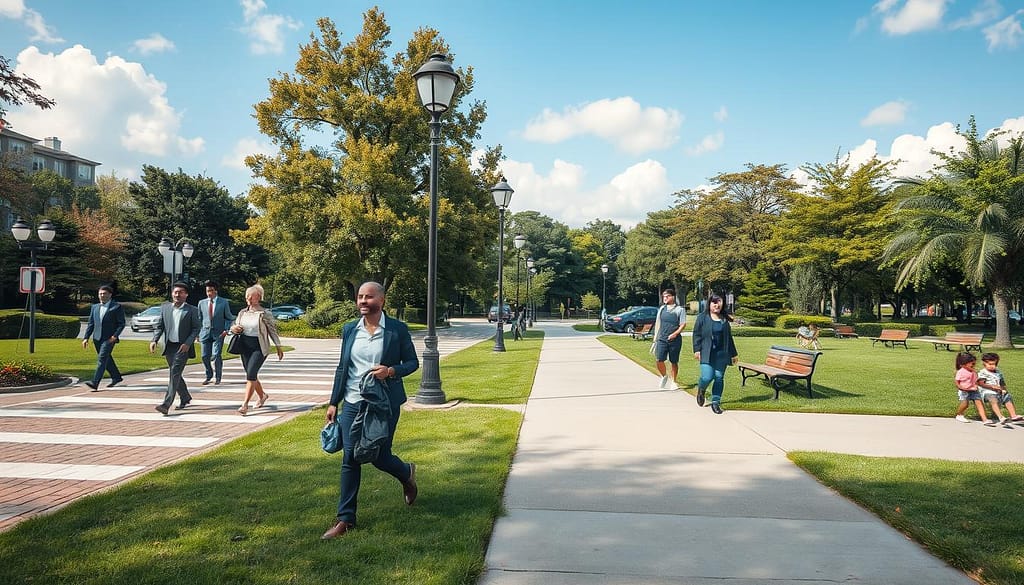
Understanding our streets and parks is key to finding safety issues for walkers. During a walk audit, we look at crossings, lighting, and parks. This helps us see what’s good and what needs work.
When checking crossings, we look at a few things:
- How well you can see crosswalks
- If signals for walkers work right
- The state of curb ramps
- If drivers stop for walkers
Next, lighting is very important for safety. We check if:
- Streetlights work
- Sidewalks are well-lit
- There are dark spots that make you feel scared
Also, how parks fit into walking paths is important. We look at:
- If park entrances are inviting or locked
- If plants hide spots that feel scary
- If there are things like benches and bike racks for walkers and bikers
Using CPTED (Crime Prevention Through Environmental Design), we see how the area affects safety. Key ideas include:
- Natural Surveillance: Views from buildings can stop crime.
- Territorial Reinforcement: Clear areas help you feel safer.
- Maintenance: Clean areas show care and stop vandalism.
Watching how people act is also key. We note things like:
- How fast cars go and if drivers follow rules
- If there are other walkers around
- How safe or not safe you feel
This mapping is both about facts and feelings. By seeing these, we can ask for better places to walk. For more on making places safer, see the Sidewalks, Crossings, and Shared Streets Plan.
Data Collection Tools and Photos
Choosing the right tools for a walk audit is key. The tools you pick can greatly affect the quality of your data. You might need a checklist for community concerns or a detailed engineering assessment.
Think about who will do the walk audit. Will it be community members, students, or experts? The level of detail you need will help you decide. For example, a community-focused audit might use a simple checklist. A technical audit might need a detailed form for city plans.
Don’t forget to gather supplies. You’ll need maps, clipboards, pens, and nametags. Also, bring cameras or smartphones for photos. A picture is worth a thousand words. Photos can show problems clearly to those who don’t know the area well.
Make sure materials are in languages everyone can understand. This makes the audit more inclusive.
After the walk, collect all the forms and photos. Organize them by location. This way, you’ll have a detailed record of what was found. This method makes sure the data is useful, even if the people collecting it aren’t experts.
Quick‑Win Fixes vs. Long‑Term Advocacy
After the walk audit, we face a key choice: quick fixes or long-term advocacy. This choice shapes how we tackle the audit’s findings. We can either go for quick-win fixes or aim for long-term advocacy.
Quick-win fixes are fast solutions that need little effort. They include:
- Trimming overgrown plants to clear sightlines at crossings.
- Fixing broken streetlights by contacting the utility company.
- Setting up temporary traffic calming, like painted curb extensions.
- Working with parks to open gates for after-hours access.
These quick wins build momentum and show that our efforts pay off. Yet, we shouldn’t just focus on quick fixes.
Long-term advocacy means pushing for big changes that take time, money, and political support. Goals include:
- Installing new crosswalks with signals.
- Creating protected bike lanes for safer cycling.
- Improving dangerous intersections.
- Getting funding for better street lighting.
To make the most of the walk audit, we need to sort issues by how urgent they are, how easy they are to fix, and who can do it. The post-walk debrief is key for planning. It’s where we:
- Share our findings and decide what’s most important.
- Talk about possible solutions and who can make them happen.
- Write down what we’ve seen and suggest changes.
Next, we make a detailed report. This can be a short summary for city council or a detailed report for transportation departments. It’s important to share this report with those who can make changes.
Getting walk participants to present at city council meetings can make our advocacy stronger. To spread the word, we can:
- Write an article or op-ed for local news.
- Post on blogs or social media.
- Reach out to foundations and groups that support our goals.
Advocacy is ongoing. It’s about building relationships, keeping the community involved, and celebrating small wins towards safer streets.
Reporting to City Councils
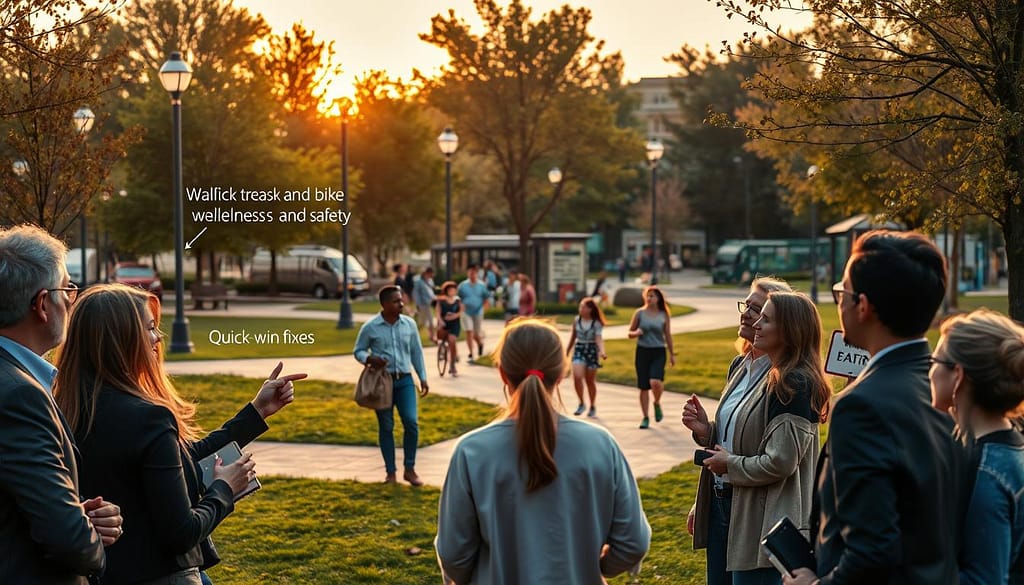
Sharing the results of Community Safety Walks with city councils helps communities push for better changes. It’s key for local leaders to grasp the safety problems faced by residents.
To effectively present your findings, follow these steps:
- Request Time on the Agenda: Contact your city council early to get a spot on their agenda.
- Understand the Format: Know the council’s meeting style and time limits to prepare well.
- Prepare Your Presentation: Mix numbers, like missing crosswalks, with photos and personal stories from walkers.
Having community members share their experiences can make a big difference. Elected officials listen more to their constituents than outsiders. This shows the community’s dedication to change.
Present your findings in a way that matches council priorities, such as:
- Public health outcomes
- Economic development
- Equity
- Quality of life
Along with council meetings, try these other ways to advocate:
- Write op-eds for local newspapers to spread the word.
- Use social media to build public support and pressure.
- Meet council members privately before public hearings to share your findings.
- Work with groups like public health departments and bike advocacy groups to boost your efforts.
Reporting on Community Safety Walks is just the start. It opens the door for ongoing talks with decision-makers. By using powerful stories and solid data, you can keep the conversation going about making communities more active-friendly.
Celebratory Walks
Celebratory walks turn the Community Safety Walk into a lively celebration. They bring people together, showing off better routes and public spaces. These events show how Crime Prevention Through Environmental Design (CPTED) works.
More people walking around means more eyes on the streets. This makes everyone feel safer and more connected to their community.
These walks mark important moments, like new crosswalks or better lighting. They can happen every month or with the seasons. These events keep the community spirit alive and strengthen friendships.
Placemaking is key in these celebrations. Things like artist-designed crosswalks or community gardens make places more beautiful and welcoming. They show off the community’s spirit and make spaces more inviting.
Getting people to join these walks shows they want safe, walkable streets. It shows the community’s dedication to making places where everyone can walk and enjoy. These walks are a reward for the hard work and a way to keep pushing for more.