

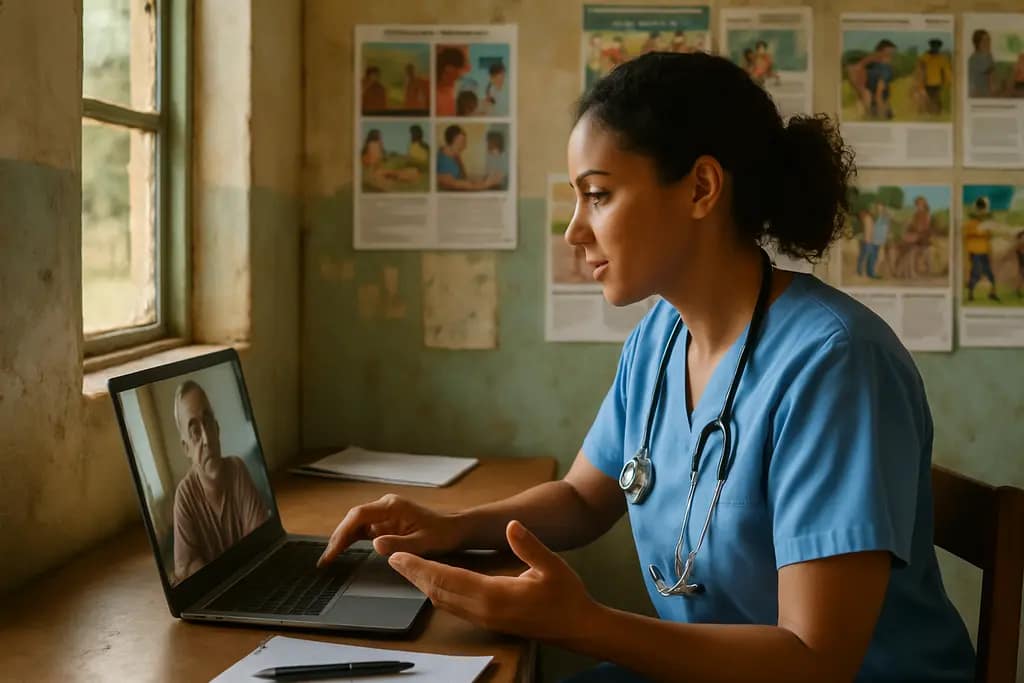
Telehealth access expansion became a clearer rural health priority on June 29, 2026, when HRSA announced nearly $140 million in new funding to improve health in rural communities, including nearly $10 million directed to telehealth-related programs: $4.275 million for a Technology-enabled Collaborative Learning Program and $5.4 million for a Telehealth Nutrition Services Network Grant Program HRSA funding announcement. For patients and local leaders, the key question is not whether video visits sound promising. It is whether these grants can help rural communities build practical links between people, clinicians, nutrition support, and local care sites without asking telehealth to solve every access problem by itself.
The cautious view is the most useful one. Funding can support infrastructure, training, and service models, but it does not automatically prove that every patient will have easier care, lower costs, or better outcomes. Access depends on local staffing, available services, patient trust, scheduling, referral pathways, and whether a telehealth visit is appropriate for the concern being discussed. Rural communities may gain the most when telehealth is treated as one tool within a broader care system, not as a replacement for local clinical relationships.
Telehealth Access Expansion Has A Rural Focus
What Telehealth Access Can Fund
The HRSA funding described on June 29, 2026, points to two practical directions. One is technology-enabled collaborative learning, which can allow clinicians or care teams to share knowledge across distance. The other is telehealth nutrition services, which may help rural and underserved communities connect patients with nutrition education and support. Both areas fit common rural health concerns: long travel distances, limited specialty availability, and difficulty sustaining small local programs.
For rural leaders, telehealth access is most useful when the grant design matches a local gap. A county may not need the same service mix as another county with a different clinic network or patient population. A nutrition network, for example, could help if patients have limited local access to dietitians or structured education. A collaborative learning model could help if local clinicians need regular support from peers or specialists. Neither approach should be presented as a guaranteed fix; each should be judged by whether it improves workable options for patients and care teams.
Why Workforce Still Matters
Telehealth programs still rely on people. Since 2019, HRSA has granted 103 awards across 36 states and one territory to support 62 accredited rural residency programs, with more than 660 resident physicians and over 750 residency positions in rural communities HHS rural workforce update. That workforce context matters because a video platform cannot replace the need for trained clinicians, care coordinators, interpreters, nutrition professionals, and local staff who help patients use services appropriately.
Rural telehealth planning can become too technology-centered. The stronger approach asks who will answer patient questions, how records will move between sites, what happens after a virtual visit, and how urgent concerns will be directed to in-person or emergency care when needed. Those are not side issues. They are the difference between a funded project and a service patients can safely understand.
Opportunities Beyond The Video Visit
Nutrition Services Need Local Trust
Telehealth nutrition services may be especially relevant for rural communities because nutrition counseling often works best when patients can return for education, questions, and adjustment over time. Still, nutrition needs vary by age, health status, pregnancy, medication use, food access, culture, and household finances. A general video session may help some people learn, but it should not replace individualized medical nutrition therapy when a patient needs clinical assessment.
This is where community wellness programs can help keep expectations reasonable. A local clinic, library, school, faith group, or community center may help residents learn that telehealth is available, but medical questions still belong with qualified professionals. Readers exploring community-based wellness opportunities may gain additional insights from the educational offerings at Trinity Bariatric Institute, while remembering that personal care decisions should be discussed with a clinician who knows the patient’s history.
Collaborative Learning Can Support Local Teams
Technology-enabled collaborative learning may also support rural care teams by creating regular spaces for professional education and case-based discussion. The opportunity is not simply that a specialist can appear on a screen. It is that local clinicians may have a more consistent way to ask questions, share patterns, and build confidence within their scope of practice.
HealthScope has also discussed cautious lessons from care teams and virtual care in community health innovations, which connects to the same principle: health technology works best when it supports people who already carry responsibility for care. For patients, that may mean fewer disconnected instructions and a better chance that local staff understand the plan. Evidence for each funded project should still be evaluated rather than assumed.
Where Rural Communities May Benefit First
Access Gains Depend On Fit
Telehealth access may be most useful for follow-up education, nutrition counseling, team-based check-ins, some behavioral health conversations, medication questions that do not require a physical exam, and preparation for in-person visits. That does not mean every concern belongs online. New or severe symptoms, emergencies, procedures, and concerns requiring examination may require in-person care or emergency services.
Rural communities may benefit first where telehealth reduces avoidable travel while preserving a clear path to local examination and follow-up. A patient who can discuss nutrition goals remotely, then see a local clinician when needed, may face fewer practical barriers than a patient asked to travel long distances for every educational visit. A clinician who receives regular virtual learning support may feel less professionally isolated. These are reasonable possibilities, not certain outcomes.
Closed Funding Windows Still Teach Planning Lessons
The Telehealth Nutrition Services Network Grant Program application deadline was July 8, 2026, and that opportunity is now closed. Even so, the structure offers a planning lesson for future rural projects: networks need defined participating sites and a clear rural or underserved focus. Communities that missed a past deadline can still review their service gaps, identify partners, and prepare patient education materials for later opportunities.
Good planning should include patient voices before a program launches. Older adults, caregivers, people without reliable transportation, and patients who have limited comfort with online tools may raise barriers that planners would otherwise miss. Community meetings, clinic feedback, and patient advisory groups can help leaders understand whether the proposed service feels usable rather than merely available.
Patient Safeguards And Equity Questions

Privacy, Records, And Follow-Up
Telehealth access should also be judged by its safeguards. Patients need to know who is providing the visit, where their records go, how follow-up happens, and what to do if symptoms change after the appointment. They should also know whether the visit is educational, clinical, or part of a referral process. Confusion in any of those areas can reduce trust.
For rural communities, equity is not only about whether a telehealth service exists. It is also about whether people can use it without extra burden. A program may need clear instructions, phone-based options when appropriate, accessible scheduling, language support, and help for patients who are unfamiliar with video platforms. These supports may not sound high-tech, but they can determine whether funding reaches the people it was meant to help.
- Ask whether the visit type is appropriate for the health concern.
- Ask how records will be shared with the patient’s regular clinician.
- Ask what should happen if symptoms worsen or new symptoms appear.
- Ask whether nutrition or education services are general or individualized.
- Ask about privacy, interpreter needs, and follow-up timing.
Telehealth Access Expansion Questions For Care Teams
The best test for HRSA-supported rural telehealth projects may be practical: does the program make care easier to understand, easier to reach, and safer to coordinate? If the answer is unclear, communities may need stronger patient education, clearer referral pathways, or better connection between remote services and local care teams.
Patients should not be expected to decide alone whether telehealth is enough for a specific concern. Before using a new rural telehealth service, consider discussing these questions with a clinician or care team: Is a virtual visit appropriate for this issue? What symptoms would require in-person or emergency care? Who will receive the visit notes? How does nutrition guidance apply to personal health conditions, medications, pregnancy, or recovery needs? What local support is available if technology fails? Those conversations can help telehealth funding become a safer part of community wellness rather than just another digital appointment option.