

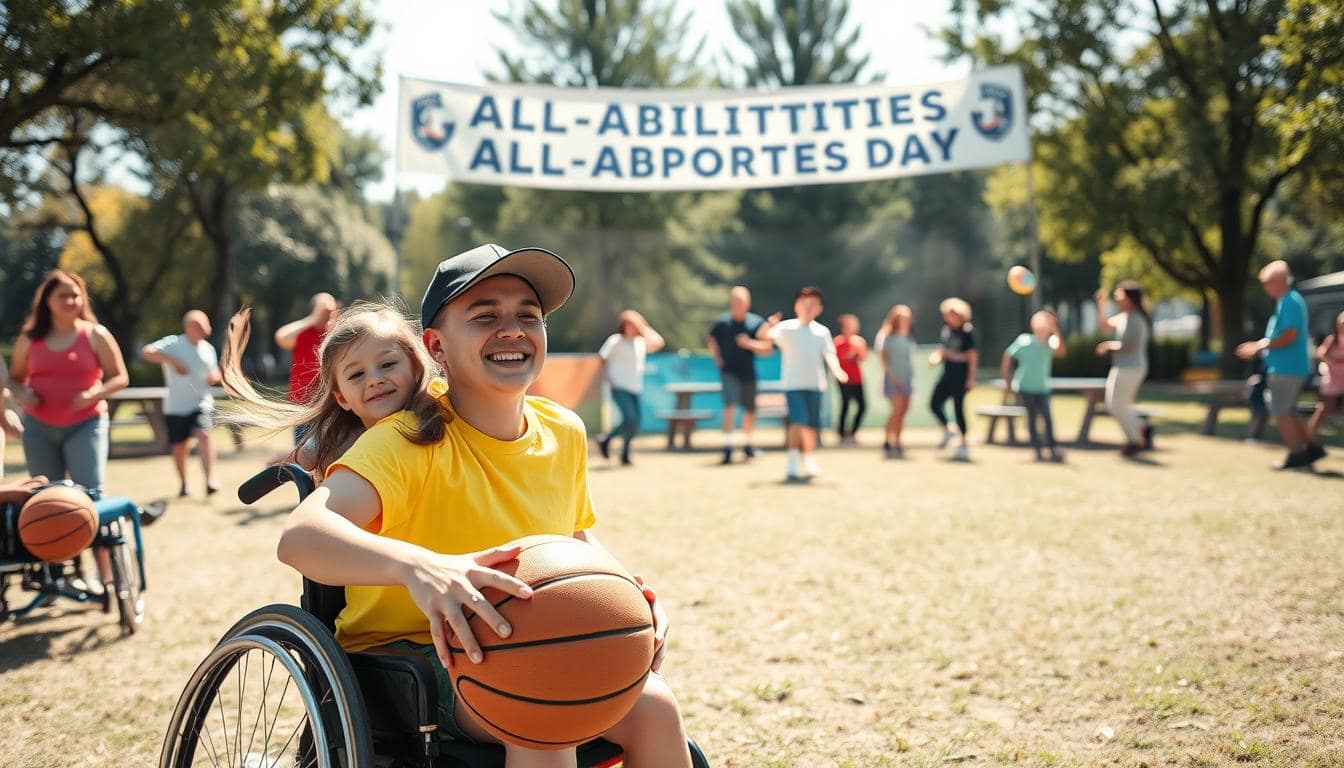
Imagine a day where everyone can play and connect. An All-Abilities Sports Day is all about that. It makes sure everyone can have fun, no matter their age or ability.
It’s all about trying new things. At the Abilities Expo, you can “dive into inclusive experiences… Try such inclusive activities as adaptive sports, dance, and so much more!” It’s a day filled with joy and discovery.
This isn’t just one day. It opens doors to more activities all year. You can find local groups and tech that help you stay active and connected.
This event celebrates our differences through movement. It builds a strong sense of community. It shows that true community access is all about inclusion. It’s where play brings us together.
Partnering with Adaptive Orgs
Working with adaptive sports groups is key to planning a great event for everyone. These partnerships are the essential backbone for a successful All-Abilities Sports Day. They offer the special knowledge, certified gear, and trained staff that regular events can’t.
Local and national groups focused on adaptive sports and disability services are full of useful advice. They guide you on everything from choosing sports to training volunteers. Their help ensures your event is truly accessible.

A big expo shows the power of working together. It brings together thousands of new tech, products, and services. A mix of vendors and experts all focused on accessibility and improving lives come together. This creates a full support system for everyone.
Finding the right partners means looking both locally and nationally. Start by finding adaptive sports clubs or chapters in your area. Then, look for well-known national foundations. Also, reach out to disability service providers at community centers and hospitals. Each partner adds more expertise and resources.
| Partner Type | Key Resources Provided | Engagement Tip |
|---|---|---|
| National Adaptive Sports Orgs | Certified coaching manuals, rule adaptations, national event models | Contact their community outreach department early in the planning phase. |
| Local Disability Service Providers | Direct participant referrals, on-site support staff, local facility knowledge | Invite them to a planning meeting to understand specific community barriers. |
| Equipment & Tech Vendors | Sport wheelchairs, auditory balls, tactile guides, assistive devices | Ask about demo equipment for the event day, reducing rental costs. |
This network of partners does more than just supply gear. It builds trust and safety for all participants. The goal is to give every resource needed for people to succeed in sports. It turns a simple day into a powerful, life-changing experience.
To see this teamwork in action, check out the community-focused programs at the Challenged Athletes Foundation’s adaptive sports clinics. Their work shows how strong partnerships can make a big difference in the community.
Equipment and Coach Training
Having the right tools and training makes a play day empowering. These elements help overcome physical and knowledge barriers.
Specialized gear is key for safety and full participation. This includes sport-specific wheelchairs and beep balls for visually impaired athletes. Regular checks and proper fitting are also vital.

Good gear is not enough without skilled leaders. Coaches and volunteers need training to use equipment correctly. They learn to modify activities as needed.
- Safe instruction techniques for various abilities.
- Hands-on practice with adaptive sports tools.
- Methods to encourage every participant.
This training goes beyond basic rules. It helps leaders create a supportive environment. When staff are well-prepared, participants take more risks and enjoy more success.
Investing in equipment and training shows a deep commitment to inclusion. It turns theoretical access into practical fun. Understanding why accessibility matters is the first step, but proper equipment and training make it a reality.
Together, tailored resources and educated staff unlock the full community play. It ensures activities like conquering an accessible climbing wall are rewarding for all.
Multi‑Station Layout (Wheelchair Hoops, Seated Volleyball)
A dynamic, multi-station floorplan turns a set of games into a unified and empowering community event. It serves as the physical guide for the day’s energy. It makes sure every participant can fully engage.
The aim is to create a smooth, “choose-your-own-adventure” vibe. Players should feel free to switch between games like wheelchair basketball and seated volleyball. They should avoid getting stuck or confused.
To achieve this, apply universal design principles to your planning. Wide pathways, logical zones, and clear signs are essential for true accessibility.
Begin by dividing your activities into zones. Place high-mobility spots, like wheelchair hoops, in spacious areas. Sit-down or stationary games, like adaptive goalball or bean bag toss, go in quieter, defined spots. This setup helps manage traffic and sensory input.
Signage is key for cognitive and visual access. Use big, clear fonts and pictures to mark each station. Maps should be at all entry points. These steps help participants with different needs to move around easily.
For seated volleyball, make sure court lines and net height are clear. A detailed guide, like the comprehensive sitting volleyball unit guide, helps volunteers set up correctly and safely for all players.
A well-designed layout does more than organize games. It promotes inclusion, reduces stress, and boosts playtime. When the environment is thoughtfully planned, the focus stays on fun, community, and sports.
Safety, Volunteers, and Evaluation
The success of an All-Abilities Sports Day depends on safety and support. Setting up clear safety rules is key. Having certified first-aid people, like those from the American Red Cross, is important.
It’s also vital to check activity areas and paths for hazards. This ensures everyone can move safely and enjoy the event.
A team of trained volunteers is essential for inclusion. They help guests, manage sports stations, and oversee resources. This includes free scooters for everyone, making it easier to get around.
After the event, it’s important to gather feedback. This helps understand the event’s impact on the community. It shows what worked well and what can be improved.
This feedback loop helps make each event better. It shows a strong commitment to making the community more welcoming for everyone.