


Building a healthy family life can feel overwhelming. Modern parents juggle countless responsibilities while sorting through endless, often conflicting, advice.
Your family’s well-being depends on a few critical, interconnected pillars. What you eat, how you sleep, and how you manage screens are deeply linked.
Data shows that proper sleep fuels energy, mood, and immunity for everyone. Toddlers need 11-14 hours, school-age kids 9-11, teens 8-10, and adults 7-9. When sleep and nutrition work together, the whole family thrives.
Our Healthy Home Workshops offer a comprehensive solution. This isn’t just another article or blog post. It’s an expert-led, whole-family approach to building lasting habits.
Think of it as the essential parenting class you’ve been looking for. We give you clear, actionable strategies to create a thriving home environment. Let’s explore how each module works.
Curriculum Design by Age Group
We know that toddlers and teens have different needs. So, we create special learning plans for each age. This way, everyone can understand and use the information right away.
For parents with young kids, we focus on foundational routines and positive food experiences. We talk a lot about picky eaters. Instead of stressing about food, we make it fun and interactive. Kids help with simple meal prep and learn about food through hands-on activities.

School-age kids get to learn more complex things. Our program teaches them about nutrition education and sleep habit independence. They learn to read food labels and understand their body’s needs. They also learn to manage their bedtime routine on their own.
Teens get their own special part of the program. We talk about how their bodies change and how to make healthy choices. We help them understand how screens affect sleep and how to plan healthy snacks for studying late.
Good sleep is key for health at all ages. Below is a table showing how much sleep each age group needs. It helps families set a common goal for sleep.
| Age Group | Age Range | Recommended Sleep Per 24 Hours |
|---|---|---|
| Toddlers | 1 – 3 years | 11 – 14 hours (including naps) |
| School-age Children | 6 – 13 years | 9 – 11 hours |
| Teens | 14 – 17 years | 8 – 10 hours |
| Adults | 18+ years | 7 – 9 hours |
Our age-specific approach makes the workshop really effective. Parents leave with useful tips, whether it’s introducing new foods or setting screen limits. By meeting each family member where they are, our lessons on nutrition, sleep, and screen use stick.
Interactive Demos (Lunchbox Lab, Label Reading)
Imagine your child packing their own lunch. Our hands-on demos teach real-world skills. We focus on interactive, experiential learning to make knowledge stick.
Families learn by doing. Our workshop turns into a lively learning space. Parents and kids work together to solve health challenges.
The Lunchbox Lab is a hit. We offer a variety of whole foods and containers. The goal is to make a meal that’s healthy, tasty, and easy to prepare.
- Learn the visual “plate method” for portioning veggies, protein, and whole grains.
- Discover clever swaps, like using a whole-wheat wrap instead of white bread.
- Get tips for involving kids in prep, which increases their willingness to eat the final product.
This demo makes mornings easier. Families leave with a plan for healthy meals all week.
Then, we tackle packaged foods with our Label Reading Interactive Session. Grocery aisles can be tricky. We teach a simple, three-step method for reading labels.
First, check the serving size. Second, look at the percent daily values for nutrients like sodium and added sugar. Third, review the ingredients list.
Shorter lists with familiar items are better. We compare similar products, like different yogurt or cereal brands. This skill helps make smarter choices at the store, a key part of healthy routines.
These demos do more than share info. They build confidence and practical skills. When families practice together, healthy habits become part of their daily life. This hands-on approach is the heart of lasting change.
Sleep Hygiene and Screen Limits
A key part of any parenting class is teaching families how to deal with sleep issues and too much screen time. This part of the class turns the latest sleep science into easy steps you can start tonight.
We start with the basics. Not getting enough sleep adds up. Just 30 minutes less each night can affect a child’s focus and mood. And screens make it worse. They trick the brain into thinking it’s daytime, which stops the sleep hormone from working right.
Experts like Dr. Whitney Roban say it’s important to limit screens before bed. The goal is not just more sleep. It’s about getting better sleep that helps with growth, learning, and staying emotionally strong.
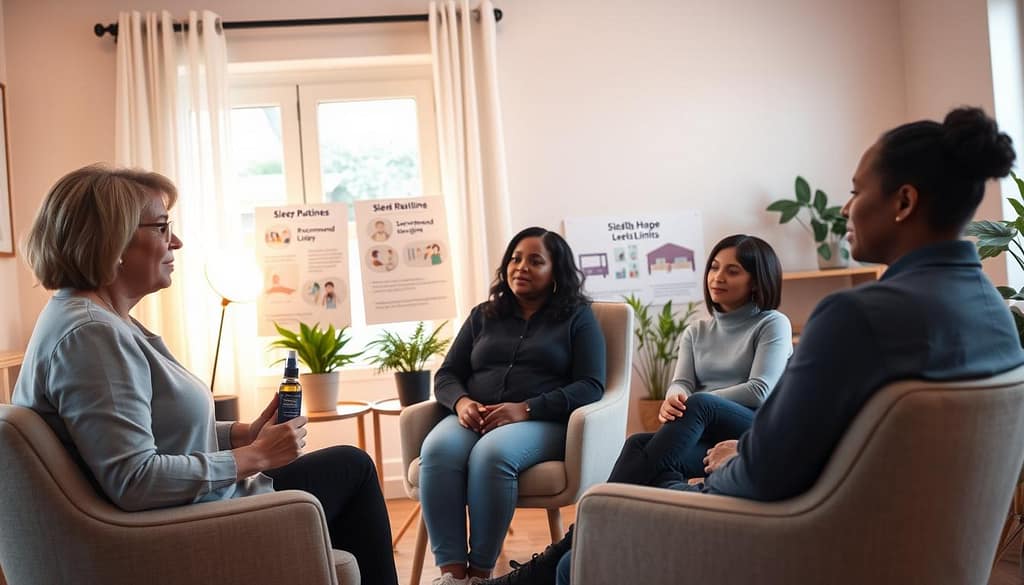
- Power Down Hour: Start winding down 60 minutes before bed. No screens. This is key for the brain to relax.
- Consistent Schedule: Set a firm bedtime and wake-up time, even on weekends. Being consistent is the best tool for sleep.
- Calming Activities: Use the power-down hour for quiet play, reading, or a warm bath. It tells the body sleep is coming.
- Environment Check: Make the bedroom a sleep haven. It should be cool, dark, and quiet. A small nightlight is okay, but avoid bright lights.
Creating the perfect sleep space is a big step that affects your mind a lot. A cool room (around 68-72°F) helps lower your body’s core temperature, which is key for sleep. Blackout curtains can block streetlights, and a white noise machine can mask loud sounds.
To solve common problems, here’s a guide we practice in class:
| Common Pitfall | Why It Happens | Workshop Solution |
|---|---|---|
| Bedtime battles and stalling | The routine is inconsistent or too stimulating; the child isn’t physically tired. | Follow the 4-step routine without changes. Add more physical activity earlier in the day. |
| Waking up frequently at night | The sleep environment may be too warm, bright, or noisy. The child may be overtired. | Check the bedroom for temperature, light, and sound. Move bedtime 30 minutes earlier. |
| Using a tablet to “relax” before bed | It’s a tempting habit, but the blue light and engaging content are too stimulating. | Replace screen time with audiobooks, quiet music, or parent-led storytelling. Charge devices outside the bedroom. |
| Weekend sleep-in derails the schedule | It feels like a reward, but it confuses the body’s internal clock. | Keep wake-up times within a 60-90 minute window every day of the week. |
The benefits of this effort are huge. Good sleep boosts the immune system, stabilizes moods, and improves memory and focus. It makes both kids and parents more resilient to daily stress. When everyone sleeps better, everyone feels better.
This module gives you the power to set firm but loving rules. It explains the “why” behind the rules, making it easier to stick to them. For more tips on setting age-appropriate limits for screen use, our resource handouts have more strategies. You’ll leave this part of the parenting class with a detailed plan for peaceful nights and more energy for the day.
Behavior Tips and Resource Handouts and Text Follow‑Ups
Starting new habits at home needs ongoing support. Our workshops give you tips to build healthy routines for your family. Taking small steps every day is the way to make lasting changes.
For families with picky eaters, try positive reinforcement. Use reward charts to encourage kids to try new foods. Remember, patience and keeping at it are key to success.
Everyone who joins us gets helpful handouts. You’ll find weekly meal planners, sleep schedules, and screen time rules. These tools make it easier to use what you learned.
Our text follow-up service sends you reminders and extra tips. You can also ask us questions if you need help. This support keeps you going even after the workshop is over.
For more tips on parenting, check out the Florida Positive Parenting Guide. It has great advice on nutrition, safety, and creating strong family routines.