

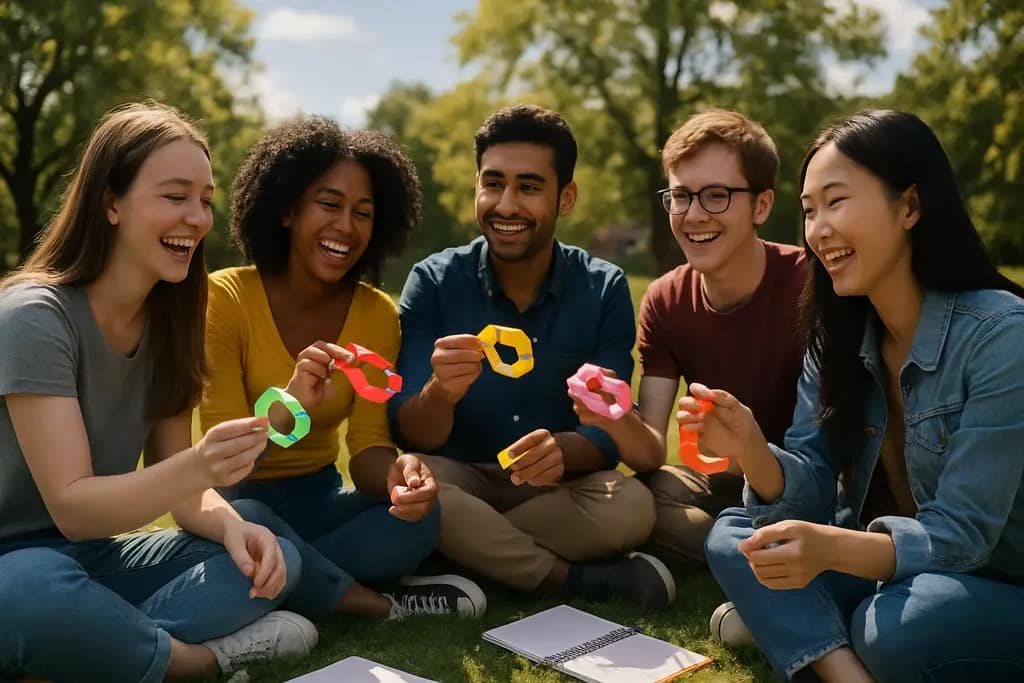
The Future Friends Program is scheduled for October 28–29, 2026, on Indiana University’s Bloomington campus, with a two-day format that combines a concert and connection-based activities. Based on the available research notes, the program is framed around a simple but meaningful idea: helping students see one another less as strangers or classmates and more as possible friends. That is a community-health goal, not a clinical intervention, and the distinction matters.
As a community activities coordinator, I tend to look at programs like this through two lenses at once. One lens asks whether the event may reduce social friction: Does it give people a reason to show up, talk, and feel less alone? The other asks whether the event stays honest about its limits: Does it avoid implying that music, social events, or peer contact can replace counseling, medical care, or crisis support? A useful campus program can encourage belonging while still pointing students toward qualified help when concerns are more serious.
What The Event Is Expected To Offer
Future Friends Program Details To Know
The research notes describe the event as a two-day mental health initiative at IU Bloomington on October 28–29, 2026. The main concert is expected to feature singer-songwriter Chelsea Cutler as the headliner, with folk singer-songwriter Corey Harper opening. The broader format includes connection-based activities, which appears consistent with the event’s stated theme of shifting how students view one another in daily campus life.
That combination of music and structured connection may be appealing because concerts can draw students who might not attend a formal wellness workshop. Still, attendance at a concert should not be treated as a mental health service by itself. The safer interpretation is that a shared event may lower the first barrier to connection. It can create a setting where a student talks to someone new, learns about campus resources, or feels a little more willing to ask questions.
For students who already feel connected, the event may simply be a social experience. For students who feel isolated, it may provide an entry point into campus life. Those are worthwhile possibilities, but they are not guaranteed outcomes. Social connection varies by personality, culture, disability, schedule, finances, caregiving duties, mental health status, and prior experiences on campus.
Why The Future Friends Program Fits Student Wellness
What The Student Surveys Can And Cannot Say
The 2025 Indiana College Substance Use Survey provides useful context for why a campus connection event may matter. Among IU students in that survey, 68.8% reported feeling nervous, anxious, or on edge within the past two weeks, and more than half reported little interest in doing things or feeling down or depressed for several days during that same period, according to the 2025 Indiana survey results. Those figures do not diagnose individual students. They do suggest that emotional strain is common enough that campus programming should be easy to find, low-stigma, and linked to appropriate support.
The same survey context also helps separate belonging from loneliness. Research notes indicate that 72.4% of students said they feel comfortable being themselves on campus, while about 24.4% strongly or somewhat agreed that they feel alone on campus. Those findings can coexist. A student may feel accepted in principle and still struggle to form close friendships, find a regular group, or know where to go during a difficult week.
That is where the Future Friends Program may fit best: not as a solution to mental health concerns, but as one carefully bounded effort to make connection more visible. The program’s value will likely depend on whether students leave with more than a memory of a performance. Clear information about counseling, peer support, student organizations, residence life contacts, and after-event opportunities would make the social opening more useful.
How Connection Activities May Support Health Literacy
Shared Activities Are Not Treatment
Connection-based activities can support health literacy when they make resources easier to understand. A student who feels unsure about counseling may be more likely to ask a basic question in a relaxed setting than in a formal office. A student who has never attended a support program may learn the difference between peer encouragement, educational programming, and licensed care. That kind of clarity can reduce confusion without overstating what an event can do.
Evidence from another IU-system context points to the relevance of loneliness as a student health concern. In the Spring 2023 National College Health Assessment report for IUPUI, more than half of respondents were classified as positive for loneliness using the UCLA Loneliness Scale, as shown in the IUPUI health assessment report. That finding should not be assumed to describe every IU Bloomington student, but it does reinforce that loneliness is a serious campus wellness topic across higher education settings.
Community programs can also model a healthier way to talk about mental health. Instead of asking students to disclose private details, activities can focus on ordinary social skills: greeting someone, joining a group, asking about shared interests, or learning where to find help. Those small steps may sound modest, but modest design is often safer. It does not pressure students to perform vulnerability in public, and it leaves room for people who prefer quieter forms of participation.
Boundaries For A Campus Mental Health Event
Signals That A Student May Need More Support
A connection event should have a clear ceiling. It can encourage participation, normalize help-seeking, and reduce isolation for some students. It should not offer diagnosis, recommend treatment changes, or imply that social activity can replace professional care. If a student is dealing with persistent distress, thoughts of self-harm, substance concerns, trauma, disordered eating, or any urgent safety issue, the appropriate next step is support from qualified professionals or emergency resources, not advice from peers at an event.
Program facilitators and student leaders can help by using plain, nonjudgmental language. For example, they can say that many students use campus support at different points and that asking for help does not require having the “worst” problem in the room. They can also avoid turning personal stories into instructions. “This helped me feel less alone” is different from “this is what you should do.”
- Students can look for official campus mental health and student affairs resources connected with the event.
- Student groups can use the program as a starting point for ongoing, low-pressure meetups.
- Faculty and staff can share resource information without asking students to disclose personal health details.
- Friends can encourage professional support when someone’s distress seems persistent, intense, or unsafe.
For broader community wellness education beyond campus life, the network resource CPCWA offers insights for readers interested in public health and engagement initiatives. Campus-specific care questions, though, should stay with Indiana University’s official student services and licensed professionals.
Future Friends Program Questions For Students
Questions To Discuss With A Clinician Or Counselor
The Future Friends Program can be understood as a doorway rather than a destination. If a student attends on October 28–29, 2026, the practical question is what happens afterward. Did the event make it easier to identify a student group, start a conversation, or learn where counseling support is located? Did it create a realistic next step for students who want connection but do not know how to begin?
Students who are already working with a counselor, physician, or other qualified professional may want to discuss how social connection fits into their broader care plan. Useful questions could include: What kinds of group activities are reasonable for my current stress level? How can I tell the difference between ordinary social discomfort and a concern that needs more support? Are there campus resources that match my needs, schedule, accessibility requirements, or privacy concerns?
No single event can carry the full weight of student mental health. Still, a well-bounded event can make care and community feel less distant. The strongest use of the Future Friends Program may be to pair music and shared activities with clear resource pathways, gentle expectations, and respect for students who need different levels of support.