

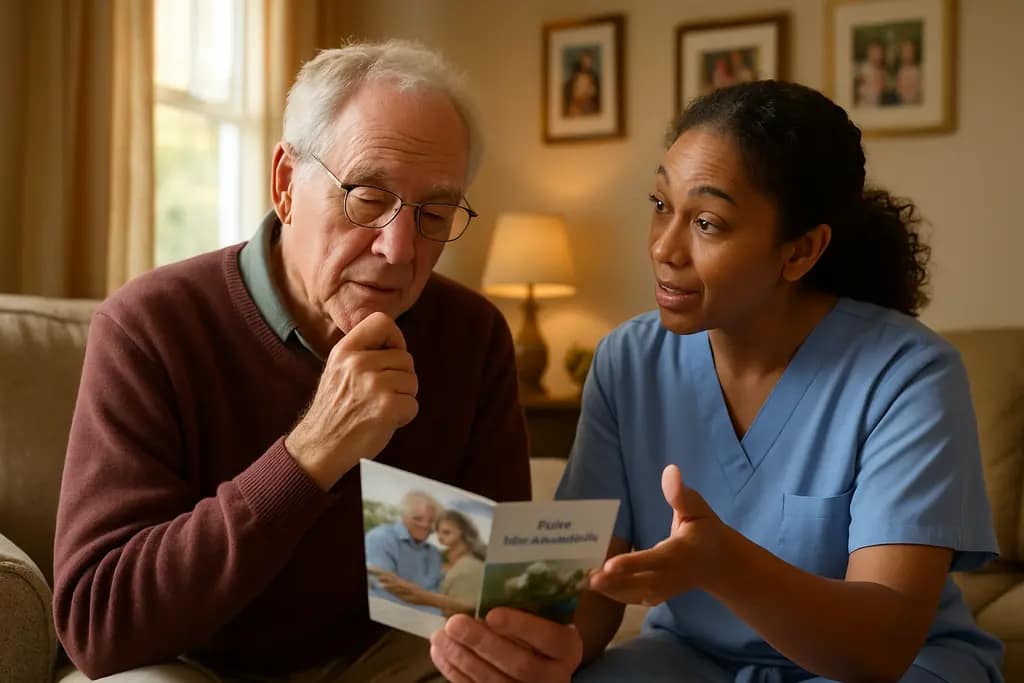
The Pain Relief Program discussed here is best understood as an education model, not a substitute for medical care. For many older adults, persistent pain can affect sleep, movement, mood, work, caregiving, and independence, but the safest response is rarely a single tactic. Education can help people ask better questions, recognize unsafe claims, and build daily habits that fit their health status and clinical guidance.
NCOA’s Wellness and Pain Relief work is notable because it centers peer-led learning among adults age 50 and older. That matters for family wellness because pain is rarely experienced alone. It can change household routines, transportation needs, caregiving roles, and social connection. A cautious family approach does not pressure an older adult to “push through” or try every new idea. It makes room for shared learning, respectful support, and conversations with qualified health professionals.
Why Pain Education Matters for Older Adults
Chronic Pain Is Common, but Not Uniform
Public health data show why pain education deserves attention. A CDC data brief reported that, in 2023, 24.3% of U.S. adults had chronic pain in the past three months, and 8.5% had high-impact chronic pain, meaning pain that frequently limited life or work activities. The same brief reported that both chronic pain and high-impact chronic pain increased with age CDC data brief.
Those figures should not be read as destiny for any individual older adult. Pain patterns vary by condition, medication use, injury history, sleep, mental health, mobility, social support, and access to care. A number can show that a problem is widespread, but it cannot tell a family what is causing one person’s pain or what plan is appropriate. That is where education has a practical role: it can help people separate general information from personal medical decisions.
Education Can Reduce Guesswork
Older adults and families often face a crowded set of choices: over-the-counter medicine, stretching, rest, physical therapy referrals, assistive devices, relaxation practices, pharmacist questions, and medical follow-up. Without clear boundaries, casual advice can become risky. One person’s experience with a medication, supplement, yoga class, or walking routine may not apply to someone with a different diagnosis, fall risk, kidney function, blood pressure pattern, or medication list.
A sound education program can give participants language for safer decision-making. It may help them document symptoms, prepare questions, notice barriers, and understand why a pharmacist or clinician should be involved before medication changes. That is a modest but meaningful goal: fewer assumptions, more informed conversations, and less isolation around pain.
How the Pain Relief Program Was Studied
Pain Relief Program Design and Peer Role
The NCOA curriculum described in the research was a six-week, peer-led self-management program for wellness and pain relief. Sessions were 90 minutes each and could be delivered in person or online. The pilot phase took place in Illinois, Washington, and Florida from November 2021 through March 2022. A controlled intervention included 90 adults age 50 and older whose regular pain interfered with daily activities peer-led program study.
The peer-led structure is worth careful attention. Peer facilitators are not presented as clinicians. Their value is in shared experience, structured discussion, and encouragement to use self-management skills within safe limits. That distinction protects the group. A peer can describe what helped them prepare for an appointment, but they should not tell another person which medicine to take, whether to stop a treatment, or how to interpret a new symptom.
In the Pain Relief Program, education included practices such as stretching, relaxation, safe use of over-the-counter pain medicine, and consultation with pharmacists and healthcare providers. The study reported increases in engagement in at least 23 of 34 pain management practices taught, with many improvements remaining six weeks after the workshop ended. These outcomes are encouraging, but they are still self-management and self-report findings. They do not prove that the program is right for every older adult or every pain condition.
What a Six-Week Format Can Do
A six-week class has practical strengths. It is long enough to introduce repeated habits, normalize questions, and allow participants to return with reflections from the prior week. It is also limited enough to be realistic for community settings, senior centers, caregiver schedules, and online attendance. That balance may be one reason peer-led models can fit family wellness work.
Still, a short program cannot replace diagnostic evaluation, medication review, physical therapy assessment, mental health care, or specialist input when those are needed. It can help participants become more active partners in care. It should not be framed as proof that education alone can resolve chronic pain.
What the Pain Relief Program Can and Cannot Show
Reported Benefits Need Careful Reading
The study findings suggest that participants reported lower daily pain levels, better self-reported health, improved emotional well-being, and more use of self-management behaviors after the program. Those are worthwhile outcomes for researchers, families, and community organizations to study further. They also need cautious interpretation because reported improvements can be influenced by group support, expectations, access to resources, and the characteristics of people who choose to enroll.
That caution does not make the findings unhelpful. It simply keeps them in proper scale. For an older adult living with persistent pain, learning how to ask a pharmacist about over-the-counter medicine safety may matter. Practicing relaxation may support coping for some people. Gentle movement discussions may help participants talk with clinicians about what is reasonable for their situation. The value is in informed, safer engagement rather than a promised medical result.
Self-Management Is Not Self-Diagnosis
Self-management can be misunderstood. It does not mean handling pain alone, ignoring new symptoms, or replacing professional evaluation with peer advice. In a safer model, self-management means learning daily skills while keeping medical decisions in the proper setting. That includes recognizing when a question belongs with a clinician, pharmacist, physical therapist, or emergency service rather than a support group.
For families, the Pain Relief Program offers a useful reminder: support is not the same as control. Relatives can help with transportation, note-taking, medication lists, appointment preparation, and home routines without pressuring an older adult into a plan. Respectful support also leaves space for values, culture, faith, and community connection. Some families find that broader community meaning and wellness resources provide additional avenues for discussing aging while maintaining a focus on medical guidance.
How Families Can Support Safe Self-Management
Keep the Focus on Questions, Not Instructions
Family members may want to help quickly when someone is in pain. The safer move is often slower: listen first, document patterns, and help prepare questions. A family member can ask, “What would you like to bring up at your next appointment?” or “Would it help to write down what makes the pain worse?” Those prompts preserve the older adult’s autonomy while making care conversations easier.
It is also useful to avoid turning personal stories into rules. If a neighbor improved after a certain exercise class, that is one person’s experience. It does not establish that the same class is safe for someone with balance concerns, recent surgery, heart symptoms, or other health factors. The same caution applies to pain relievers, supplements, restrictive diets, heating devices, and online programs.
- Ask whether new pain, worsening pain, or changing symptoms should be evaluated.
- Review all prescription and over-the-counter medicines with a clinician or pharmacist.
- Discuss whether stretching, relaxation, walking, Tai Chi, yoga, or physical therapy is appropriate.
- Ask how pain, sleep, mood, and daily function should be tracked between visits.
- Clarify which symptoms require urgent or emergency care.
Community Programs Need Clear Boundaries
Community wellness programs work best when they are clear about scope. A facilitator can create a respectful space, keep discussion moving, and remind participants to bring medical questions to qualified professionals. A facilitator should not diagnose pain, compare medication doses, interpret test results, or recommend stopping treatment.
Those boundaries are especially important online, where advice can spread quickly and sound more certain than the evidence allows. A well-run group can welcome personal experience while correcting universal claims. “This helped me discuss options with my provider” is different from “everyone should do this.” The first supports health literacy. The second may create risk.
NCOA Wellness And Pain Relief Program
The NCOA Wellness and Pain Relief Program points to a practical family wellness lesson: education can empower older adults without pretending to replace clinical care. The research supports cautious optimism about peer-led self-management education, especially for helping participants use coping behaviors, seek pharmacist or provider input, and think about pain in a whole-person way.
For older adults and families, the next step is not to copy a classmate’s plan or treat a study result as a personal prescription. A safer next step is a prepared conversation with a healthcare professional. Useful topics may include what could be contributing to pain, which activities are safe, how to use over-the-counter medicines appropriately, whether referrals may help, and what warning signs should prompt urgent care. Education is most helpful when it strengthens those conversations rather than replacing them.