

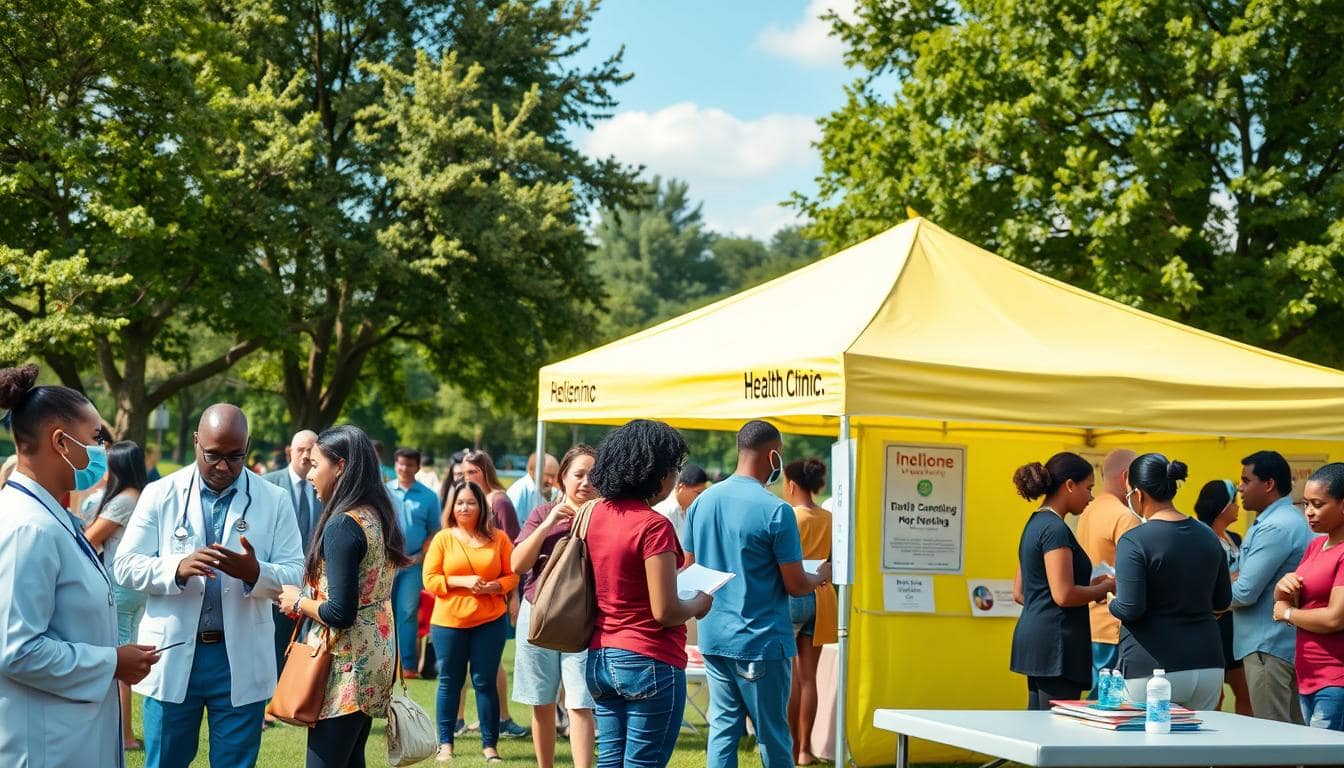
Imagine healthcare services popping up in your neighborhood or library. Pop-up clinics are temporary events that bring care to people. They show up where they’re needed most.
These clinics are different from permanent places or mobile units. They use spaces like community centers or campuses. Their goal is to meet people where they are.
Pop-up clinics offer two main benefits. They provide health screenings and basic care. They also help spread the word about health through outreach and education. This builds trust in the community.
For those facing barriers like cost or lack of trust, these clinics are a lifeline. They offer a practical way to get preventive health services.
This article will dive into the essentials of running a pop-up clinic. We’ll talk about choosing the right services, building a strong team, and measuring success. This ensures you help those who need it most.
Choosing Screenings by Community Need
When picking health screenings for your mobile clinic, ask yourself: what does this community need most? Your services should match your clinic’s main goals. This could be serving a lot of patients or sharing important health info. A one-size-fits-all plan doesn’t work. The best clinics are based on local data and real partnerships.
First, do a community needs assessment. Look at local health reports to find common health issues. Talk to locals and work with community groups, churches, and social services. They know a lot about health problems and barriers to care, like not having insurance.

This approach helps you focus on screenings that matter most. For example, STI and HIV testing are key for sexual health. But, primary care screenings like blood pressure checks and blood sugar tests might be even more effective. Many people will stop for a quick check, even if they didn’t plan to visit a clinic.
The Health-at-Home Community Pop-Up Clinic in Clayton County, Georgia, is a great example. They focused on hypertension and diabetes after finding these were big needs in their community. By matching their services to local health issues, they made a big difference.
Practical things also matter when choosing screenings. What tests can your staff do safely in a mobile setting? Some tests need special resources. For example, urine tests need a private bathroom, and some exams need a private space. The NFPRHA guide offers tips, like using a community center for facilities. Plan ahead to avoid problems and make sure patients have a good experience.
Choosing screenings based on community needs is smart. It makes sure every dollar and hour is used well. By starting with local data and ending with practical services, your clinic becomes a trusted resource.
Staffing and Licensure
Your clinic’s success depends on a well-organized team and knowing the law. These two things ensure screenings are done right and follow the rules.
First, figure out what your team needs. In a community setting, being flexible is key. You might have community health workers, health educators, LPNs, and supervising nurses.
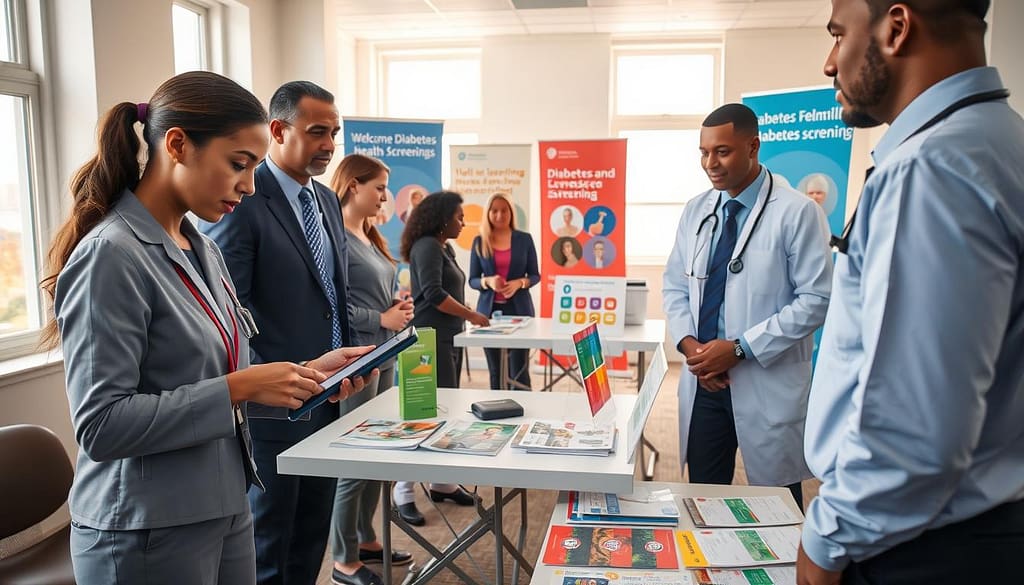
It’s good to train staff for different tasks. This way, they can adjust if needed or if someone is out. Having clear roles helps your team be flexible.
| Role | Primary Functions | Typical Credentials/Licensure | Notes for Flexibility |
|---|---|---|---|
| Clinic Administrator | Manages clinic info, schedule, staff, and inventory. Oversees daily operations. | Often requires management experience. In systems like VAMS, this is a defined role. | Can often assist with patient flow or basic administrative tasks. |
| Front Desk / Check-in Staff | Greets patients, verifies info, manages consent forms, and directs flow. | High school diploma or equivalent; training in customer service and privacy. | Easily cross-trained to assist with post-screening education or data entry. |
| Community Health Worker (CHW) | Provides cultural liaison, health education, and follow-up guidance within the community. | Often requires certified training program completion, but licensure varies by state. | Highly valuable for patient engagement and can support screening logistics. |
| Licensed Practical Nurse (LPN) | Performs basic clinical tasks like vitals, point-of-care tests (e.g., A1C), and patient intake. | Must hold a state LPN license. Scope of practice is defined by state nurse practice acts. | A versatile clinical role that can handle many screening procedures. |
| Healthcare Professional (e.g., RN, NP) | Provides clinical oversight, interprets results, addresses patient questions, and manages care pathways. | Must hold an active, state-specific license (RN, NP, MD, PA). | Essential for supervision and clinical decision-making; may float between stations. |
Licensure and liability are complex. States have different rules for temporary sites. Getting legal advice is a must. It helps you understand what you need and how to set up legally.
If you’re doing tests like a fingerstick A1C test, you need a CLIA waiver. This federal certificate is required for certain tests outside a lab. Getting it is easy but must be done before testing starts.
For clinics using VAMS, you need specific staff. You’ll need a clinic administrator, a front desk person, and a licensed healthcare professional. The administrator is key, handling digital clinic details and staff.
Don’t forget about accessibility. Your clinic must follow the ADA. This means making sure the site is accessible and providing help for patients with disabilities. Planning for this early on helps everyone.
By building a strong team and following the rules, your pop-up clinic will be safe and effective. It will help the community and operate legally.
Consent, Data Flow, and Privacy
Handling personal health info with care is key for trust in mobile screening services. This trust is built on clear, informed consent and rigorous data privacy. Every step, from scheduling to sharing results, must respect the patient’s privacy.
Creating a private space is the first step. Pop-up clinics often use open spaces. Simple dividers or curtains can make a private area. This shows respect and creates a safe space for health talks.
Once privacy is set, digital data flow starts. Modern clinics use systems like VAMS for patient management. Patients schedule online, check in with a tablet, and sign consent forms digitally.
This system links consent to health records. When a test, like a vision test, is done, results go straight into the record. This way, data is secure and errors are reduced.
It’s important to know how data moves for informed consent. Patients should understand what info is collected and how it’s stored. Clear explanations are essential, even more so for communities that have been hurt by healthcare breaches.
| Component | Traditional Paper Method | Integrated Digital System (e.g., VAMS) | Key Benefit for Trust |
|---|---|---|---|
| Informed Consent | Physical form, can be lost or misunderstood. | Digital form with step-by-step explanations, stored permanently with record. | Creates a verifiable, unhurried consent process. |
| Data Collection | Handwritten on charts, risk of transcription errors. | Direct entry into secure database, often at point-of-care. | Ensures accuracy and immediate confidentiality. |
| Result Management | Paper results given to patient; no central tracking. | Results like vision screening scores are stored securely and can be shared with PCPs. | Enables reliable follow-up and continuity of care. |
| Patient Communication | Phone calls or mail, which can be slow and insecure. | Secure messaging through patient portal. | Provides a private channel for sensitive health updates. |
The table shows why digital systems are better for consent and data. It makes privacy promises real and visible. For example, seeing vision test results online shows responsible data handling.
A pop-up clinic’s reputation depends on this. Explaining data practices is key for trust. When people feel their info is safe, they’re more likely to participate and recommend services. This builds a strong community health partnership.
Follow‑Up Care Pathways
The real impact of a screening event is seen after the patient leaves. A pop-up clinic’s work is not done without a solid follow-up plan. Good pathways link a one-time health screening to ongoing care and social services.
This connection turns a single visit into a lasting healthcare relationship. It’s key to better health over time.
Models like the HHCPC show how it’s done. They set up immediate follow-up care. They also check if people qualify for social services.
This creates a strong system for both medical and social needs. You move from finding a problem to solving it.
Building a seamless pathway needs careful steps. The goal is to make sure no patient is left behind.
Strategies for Seamless Connection
First, try to schedule follow-up appointments on the spot. This removes a major barrier for the patient. Use tablets or a mobile station to book visits with partner clinics in real time.
Second, provide clear instructions on what to do next. Give patients a physical “next steps” card. Include contact names, phone numbers, and addresses for their assigned provider.
Third, use a patient navigation system. A navigator can call the patient within 48 hours. They answer questions, help with transportation, and confirm the upcoming appointment.
Lastly, establish formal referral partnerships with local clinics and community organizations. A signed agreement ensures they will accept your referrals promptly. This makes the transition from your pop-up clinic to ongoing care smooth.
These strategies connect temporary pop-up sites to permanent health screenings and care centers. They make the transition from event to ongoing management smooth and reliable.
| Pathway Component | Key Action | Who is Responsible? | Timeline |
|---|---|---|---|
| Immediate Scheduling | Book the follow-up visit before the patient leaves the pop-up site. | Clinic Staff / Volunteer | Day of Event |
| Social Needs Screening | Assess for food, housing, or transportation barriers that affect health. | Social Worker / Navigator | Day of Event |
| Patient Navigation | Assign a guide to help the patient through the next steps. | Patient Navigator | Within 48 Hours |
| Formal Referral | Send a completed referral form to the partner clinic via a secure system. | Pop-Up Clinic Coordinator | Within 24 Hours |
| Outcome Tracking | Confirm the patient attended the follow-up appointment and record the result. | Data Manager / Navigator | 1-2 Weeks After Referral |
The table above shows a structured approach. Each part is key to moving a patient from screening to care. Combining medical and social referrals is a best practice shown by successful health screening initiatives.
Patient navigators are very helpful. They offer a single point of contact. This reduces confusion and builds trust with those who may be hesitant about healthcare.
Formal partnerships are your safety net. They turn vague promises into solid commitments. When a local health center agrees in writing to accept your referrals, you create a reliable exit route from your pop-up clinic.
In the end, a great follow-up plan does more than close a loop. It opens a door. It turns the data from a health screening into a long-term plan for better health. It ensures your community event leads to lasting change.
Cost, Funding, and KPI Dashboard
Starting a pop-up clinic needs careful financial planning. The cost depends on your goals. For example, a rapid HIV test costs about fifteen dollars per patient. But, adding services like contraceptives increases the budget.
It’s important to set success metrics early. These Key Performance Indicators (KPIs) make up your clinic’s dashboard. Track patient numbers, marketing, and educational exchanges. Also, keep records of screenings and follow-up care.
This data helps with funding requests and improves operations. It shows your impact to stakeholders and grantors. Remember, your clinic’s data fits into bigger systems. It might affect reports like the Uniform Data System metrics.
Clear metrics turn activity into evidence for lasting community health. Good resource management means being open about funding. At HealthScope, we are transparent about funding. This keeps our editorial choices and health info independent and trusted.