

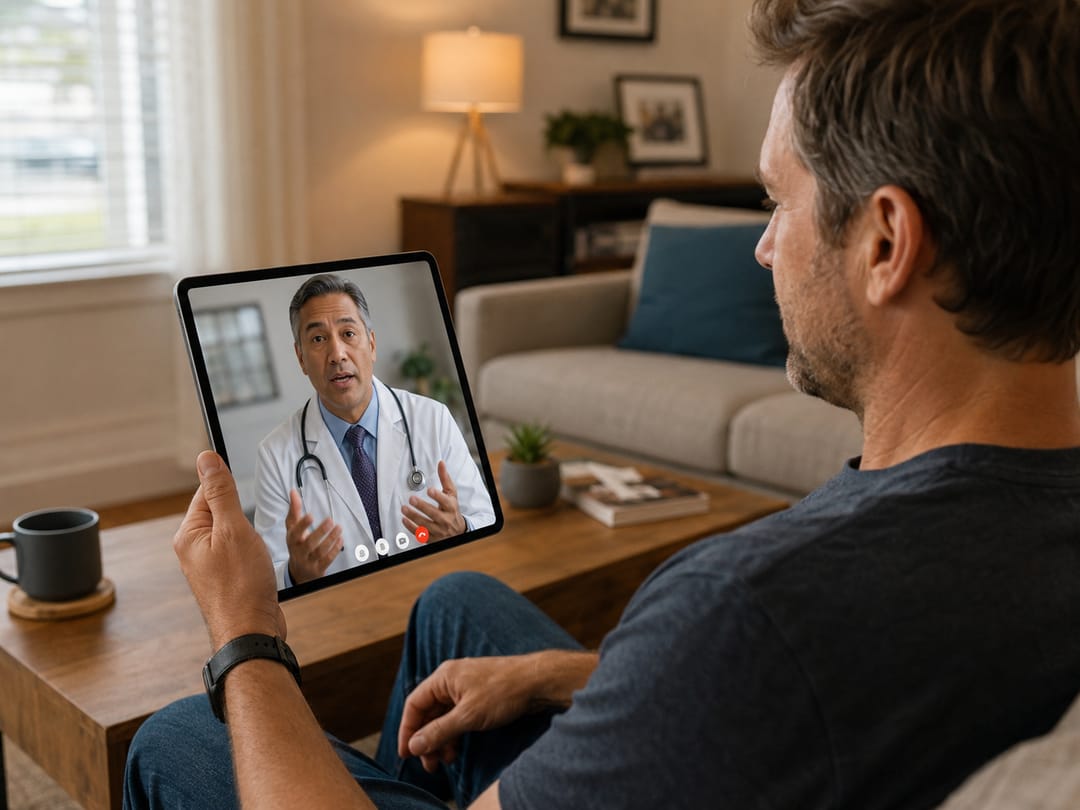
Virtual physical therapy has moved beyond emergency-era video calls, but convenience has created a new problem: patients often assume anything that can be discussed online can also be safely evaluated online. The better question is whether the therapist needs to observe and coach movement—or physically test tissue, strength, stability, and sensation before choosing a plan.
That distinction matters across health and wellness guidance, because access should never come at the expense of clinical judgment. Virtual care can be highly useful, but its strongest role is not replacing every clinic visit. It is putting the right parts of rehabilitation in the patient’s actual living environment.
Virtual Physical Therapy Works Best When Movement Is the Treatment
Online rehabilitation is most convincing when movement is the treatment. A therapist can watch a patient squat, climb a step, reach overhead, rise from a chair, walk across a room, or perform a prescribed exercise. The screen becomes a coaching tool: change foot position, slow the lowering phase, reduce the range, or add resistance.
This format can work especially well for exercise progression, mobility routines, chronic pain education, post-discharge follow-ups, and recovery check-ins. It also removes the gap between “clinic performance” and home reality. A patient may complete an exercise perfectly on a treatment table yet struggle to fit it into a small apartment, a busy workday, or a staircase without a handrail.
A 2024 telerehabilitation practice guideline supports virtual or hybrid delivery for suitable patients and conditions, while emphasizing shared decisions, barriers, safety, and clinical circumstances. That is a stronger standard than simply asking whether video visits are available.
A Camera Can Reveal More Than Patients Expect
A well-run video assessment is not just a conversation about pain. With enough floor space, good lighting, and a properly positioned camera, a physical therapist can observe posture, gait, balance strategies, joint movement, exercise technique, and how symptoms change during functional tasks.
The home setting can reveal real-world function that a clinic cannot easily reproduce. A therapist may see that the couch is too low for a patient recovering from surgery, that a walker catches on a rug, or that a desk setup repeatedly aggravates neck pain. Those details can lead to practical changes immediately.
Pain-management visits also translate well when the plan centers on pacing, graded activity, breathing, sleep routines, flare-up planning, and replacing fear-driven avoidance with safe movement. Video is particularly useful for frequent, shorter check-ins that keep a program from drifting between appointments.
Where Online Care Reaches a Hard Limit
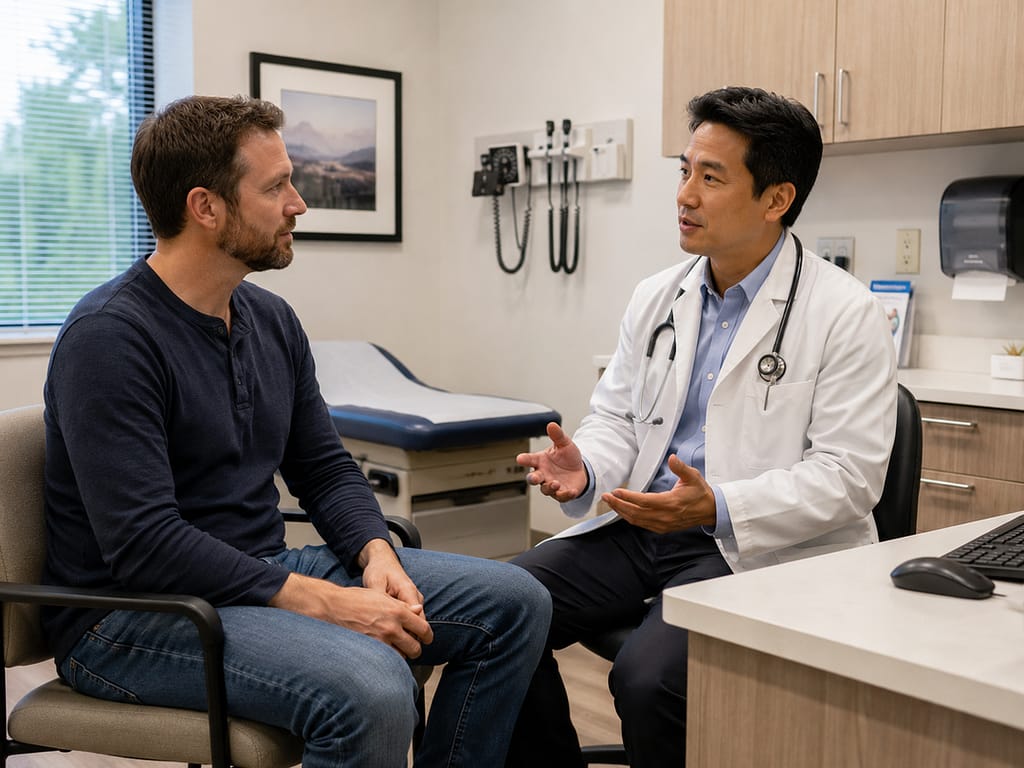
A camera cannot palpate swelling, compare tissue temperature, test ligament laxity, grade subtle muscle weakness, assess reflexes, or feel the difference between protective guarding and a true mechanical block. It also cannot provide manual therapy, hands-on assistance, dry needling, or safe use of clinic-only equipment.
That is where diagnostic precision matters more than convenience. New injuries after a hard fall or collision, unexplained rapid loss of strength, worsening numbness, severe balance changes, or an inability to move safely should push care toward an in-person examination. Sudden or severe symptoms may require urgent medical evaluation rather than a routine therapy appointment.
Current federal tele-PT guidance specifically identifies direct physical examinations, hands-on techniques, and full pelvic floor or musculoskeletal examinations as situations that may be better handled in person. It also encourages hybrid models when they improve the patient experience and outcome.
Virtual, In-Person, or Hybrid Care?
The right delivery method depends less on the diagnosis label than on what the therapist must learn or do during that particular visit.
| Service or situation | Virtual fit | In-person trigger | Best starting model |
|---|---|---|---|
| Exercise instruction and progression | Strong | Unsafe technique despite coaching | Virtual or hybrid |
| Gait and basic mobility screening | Often useful | High fall risk or need for guarding | Hybrid |
| Chronic pain education and pacing | Strong | New unexplained neurologic symptoms | Virtual or hybrid |
| Post-operative recovery check-in | Useful when stable | Wound concern, marked swelling, unexpected decline | Hybrid |
| New acute injury assessment | Limited | Significant trauma, instability, or uncertain diagnosis | In person |
| Pelvic floor or detailed soft-tissue exam | Limited | Physical examination is required | In person |
The table points toward hybrid care as the most flexible option. An initial clinic examination may establish safety and diagnosis, while later video visits handle exercise progression and home problem-solving. The sequence can also run in reverse: a virtual screen may identify that an in-person examination is the next appropriate step.
The Signals That Should Change the Care Plan
Virtual care stops being useful when the therapist cannot see enough, the patient cannot move safely, or the findings do not match the expected recovery pattern. Repeated technical failures matter, too. Poor video quality, limited space, hearing difficulties, or an inability to reposition the camera can turn an otherwise reasonable assessment into guesswork.
Patients should also notice whether the clinician is willing to change the delivery mode. A trustworthy virtual provider explains what can be assessed remotely, what remains uncertain, and exactly when an office visit or medical referral becomes necessary. A service that treats every condition through the same app-based pathway is prioritizing its format over the patient.
Before the first session, patients can improve the visit by preparing a stable device, several camera angles, supportive footwear, prescribed equipment, and a second person when balance assistance may be needed. They should also know where they will go if the therapist recommends hands-on evaluation.
Virtual Physical Therapy Should Earn Its Place Visit by Visit
The strongest virtual physical therapy programs do not pretend the screen can replace touch. They use video for the work it handles well—movement observation, exercise coaching, home-safety problem-solving, education, and consistent follow-up—while preserving a clear path to physical examination.
That boundary is the real measure of quality. Virtual physical therapy matters now because it can reduce travel and make rehabilitation easier to continue, but its value depends on choosing the delivery method visit by visit. The goal is not maximum convenience. It is the safest route to better movement and lasting function.