

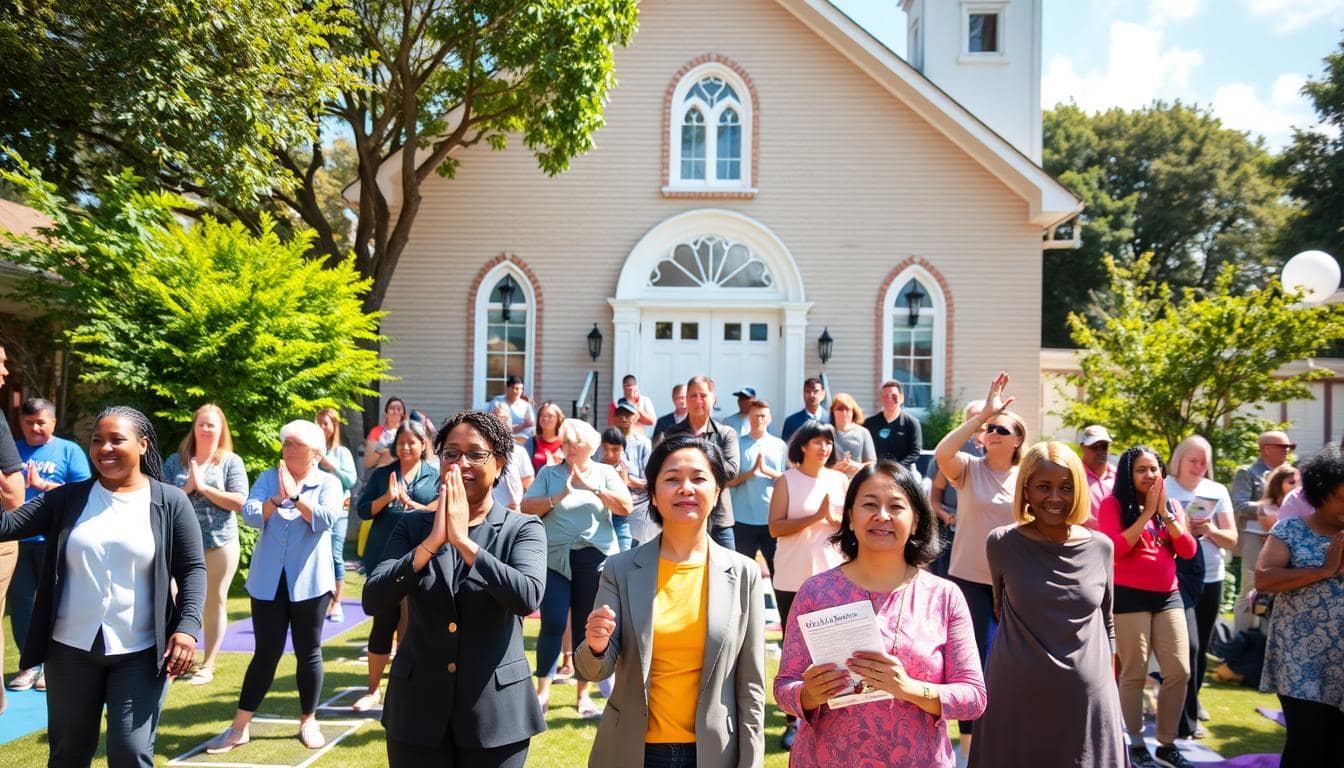
The link between faith-based health and physical well-being is becoming more important. Houses of worship are now key players in promoting health. A recent partnership between Duke Divinity School and Church Mutual Insurance Company shows this trend.
They held their first Faith + Fitness webinar in 2022. Experts like Dr. Katherine Smith and Dr. Gregg Allison spoke. They stressed the need to care for both body and soul.
This effort shows that ignoring physical health can exhaust spiritual leaders. It makes it hard for them to lead their communities. By focusing on both body and spirit, these places are becoming key for health.
We will see how churches, mosques, and synagogues can lead in health. They aim to boost physical activity and well-being. This reflects their values of care and stewardship.
Space, Scheduling, and Culture
Creating a successful faith-based health initiative needs careful thought on three key areas: space, scheduling, and culture. These must match each congregation’s unique traits to boost congregation wellness.
Physical Space: The setting for health activities greatly affects participation. Using places like fellowship halls for cooking or parking lots for walking clubs makes programs more reachable. By changing these areas, churches can build community and encourage healthier living.
Scheduling: It’s important to fit wellness activities into the church’s schedule. Leaders should plan these programs around regular services and midweek events. For instance, a walking club after Sunday service can boost attendance and foster support.
Cultural Context: Knowing a congregation’s culture is key for health initiatives. Dr. Joseph Spears notes that what works in one faith community might not work in another. Leaders should look at their congregation’s food traditions, social life, and culture. This helps create wellness plans that feel natural and respectful, improving congregation wellness.
To build a strong health initiative framework, consider these steps:
- Find spaces for activities.
- Work with church leaders to fit wellness into schedules.
- Get to know congregation members’ cultural likes.
By focusing on these areas, faith groups can make health programs that connect with their community. For more on community fitness benefits, see this useful resource.
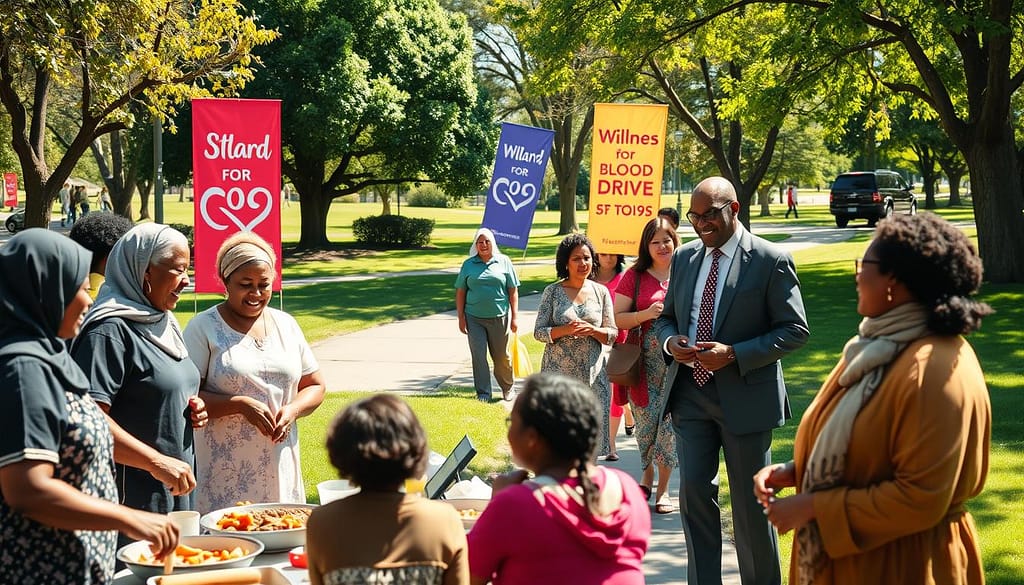
Programs (blood drives, walking sermons, cooking)
Health programs in churches can inspire people to live healthier. They can host blood drives, walking sermons, and cooking classes. These activities help promote health through faith.
The Medical College of Wisconsin has a great example. They created a 10-week program for kids. It taught them about nutrition and running. They worked with The Badgerland Striders to make it more visible.
Here are some ideas for health programs in churches:
| Program Type | Description | Benefits |
|---|---|---|
| Blood Drives | Host regular blood donation events to support local hospitals. | Encourages community involvement and saves lives. |
| Walking Sermons | Pastors lead congregants on walks while discussing spiritual topics. | Promotes physical activity and fosters community connection. |
| Cooking Demonstrations | Offer classes on preparing heart-healthy meals. | Educates members on nutrition and healthy eating habits. |
To make these programs work, churches need volunteers who care about health. A team of passionate people can keep these efforts going. By linking physical activity to spiritual growth, churches can make a big difference in their communities.
Privacy and Inclusivity
Privacy and inclusivity are key for a healthy congregation. Faith communities must protect personal health info when starting health initiatives. This is true for tracking health or organizing weight-loss groups.
Dr. Gregg Allison, a well-known professor, talks about the importance of our bodies in his book, “Embodied: Living as Whole People in a Fractured World.” He highlights the value of all body types and abilities. This view is important for health programs that include everyone.
Inclusivity means making everyone feel welcome. Programs should be for seniors, people with disabilities, and those at different fitness levels. A place where no one is judged helps everyone feel better.
The Medical College of Wisconsin uses Health Advocates from the community. These advocates make sure health programs fit the culture and are trustworthy. Trust is key for keeping dignity and getting people involved in health programs.
The aim is to make a ministry where everyone feels included and respected. By focusing on privacy and inclusivity, faith groups can support their members’ well-being.

Grants and Storytelling
Funding is key for faith-based health projects to thrive. Leaders can find money from church funds to local health foundations. Finding the right grants is critical for keeping health programs going. The Robert Wood Johnson Foundation and CDC offer great chances for faith-based health projects.
Getting money is just the start. The real power lies in storytelling. Telling stories of success draws more support. The Medical College of Wisconsin shows this by sharing their results at big conferences.
It’s important to track health gains. Simple numbers show the good work done. Faith groups can share their stories on social media and newsletters. This way, they inspire others to join health partnerships. It boosts visibility and secures the future of faith-based health work.