

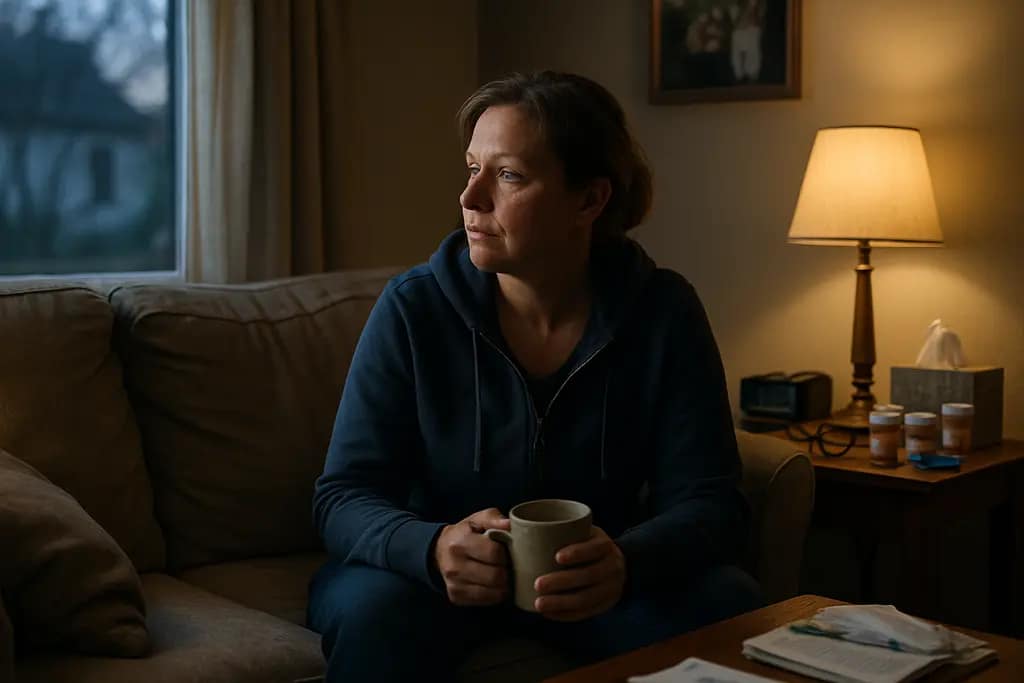
New Hampshire Caregivers often hold together daily routines, appointments, household needs, transportation, paperwork, and emotional support while trying to protect their own wellbeing. In the 2025 AARP caregiving report, 24% of adults in New Hampshire, about 281,000 people, were identified as family caregivers, and 43% reported moderate to high emotional stress. Those figures do not describe every household, but they give communities a clearer starting point: caregiver self-care is not a personal luxury. It is a practical support need that should be discussed openly, without turning peer support into medical advice.
This article is general health education. It cannot replace guidance from a clinician, social worker, mental health professional, or qualified benefits counselor who understands a person’s specific health situation, living arrangement, and care responsibilities.
New Hampshire Caregivers And The Self-Care Gap
New Hampshire Caregivers Are Not A Single Group
Caregiving can involve an older parent, spouse, adult child, friend, neighbor, or loved one with disability, serious illness, memory changes, mental health needs, or functional limits. The research supplied for this topic points to a broad caregiver population across age groups and household types. That matters because self-care advice can become unhelpful when it assumes everyone has the same schedule, finances, transportation, family support, or health status.
New Hampshire Caregivers may be employed, retired, parenting, managing their own health conditions, or living far from the person they support. Some provide hands-on daily help. Others coordinate appointments, medications, bills, home services, and safety planning from a distance. A cautious self-care approach starts by asking what strain is actually present, rather than offering a fixed checklist that may not fit.
Self-Care Means Capacity, Not Perfection
For caregivers, self-care is sometimes presented as a personal attitude problem: take a walk, sleep more, relax, or think positively. Those ideas may be useful for some people, but they can sound dismissive when a caregiver is short on time, money, coverage, or training. A more realistic frame is capacity. What helps the caregiver keep enough energy, attention, and emotional steadiness to keep participating in care without becoming isolated?
That may include small breaks, shared task lists, respite discussions, peer support, practical education, or a conversation with a clinician about stress, sleep, mood, pain, medication questions, or the caregiver’s own health needs. The right mix can differ widely. A caregiver who is overwhelmed by paperwork may need benefits counseling more than a meditation app. A caregiver doing physical tasks may need instruction from the care team, not encouragement to “try harder.”
Why Stress Can Build Quietly
Care Work Often Expands Before Anyone Names It
Caregiving often begins as a favor: a ride, a pharmacy pickup, help after an appointment, or a few phone calls. Over time, those tasks can become a second schedule. The emotional load may also grow because the caregiver is watching changes in someone they love while trying to make decisions with incomplete information. This is one reason support should not wait until a crisis. Earlier conversations can make it easier to separate what is urgent, what can be shared, and what requires professional input.
Stress can also be quiet because caregivers may not describe themselves as caregivers. They may say they are “just helping family.” That language is understandable, but it can keep people from asking for resources that are meant for them. Health literacy matters here. If someone does not recognize that their unpaid care has a name, they may not know that caregiver support specialists, respite referrals, education, and support groups may be available in their area.
Isolation Can Be A Warning Sign
Isolation does not always mean being physically alone. A caregiver may speak with clinicians, pharmacies, insurers, and relatives all week and still feel emotionally unseen. Support groups can help reduce that sense of carrying everything alone, especially when the group keeps its purpose clear. For New Hampshire Caregivers, a support group is most useful when it offers shared experience, coping language, and resource awareness without telling members what medical choices to make.
Policy changes, eligibility rules, and forms can add another layer of strain. HealthScope has also discussed how support groups during policy changes may help people manage paperwork stress and isolation while keeping treatment decisions with qualified professionals. That same boundary is useful for caregiver groups.
Support Groups Need Clear Boundaries
What Peer Support Can Do
A caregiver support group can give people a place to say what is hard without needing to protect everyone else from the truth. It can also help members compare practical questions: how they prepare for appointments, how they organize records, how they ask relatives for specific help, or how they handle the guilt that can come with needing a break.
Good groups also help normalize asking for support before exhaustion becomes severe. They can point members toward local information channels and remind them that needing respite, training, or emotional backup is not a failure. For broader community wellness reading within a related network, the CPCWA community wellness site may be a useful resource to know about.
What Peer Support Should Not Do
A peer group should not diagnose a loved one, interpret new symptoms, recommend medication changes, judge a treatment plan, or tell a caregiver to continue or stop a service. It should not pressure members to buy products or accept one person’s experience as a rule for everyone else. A strong facilitator can protect the group by using simple language: “You can share what happened in your situation, but medical decisions need to stay with the care team.”
This boundary is not cold or impersonal. It keeps the meeting safe. Caregivers often hear strong opinions from relatives, neighbors, online groups, and sales-oriented sources. A community group earns trust when it slows down certainty and brings the conversation back to questions, records, training needs, and professional guidance.
Planning Respite Without Treating It As A Luxury

State Structure Can Help People Ask Better Questions
New Hampshire law gives caregiver support a visible place in the aging and disability service system. Under New Hampshire Chapter 161-F, each ServiceLink Aging and Disability Resource Center is to have a caregiver support specialist, with duties connected to respite, caregiver support groups, education, referral, and related assistance. For families, that law does not answer every practical question, but it does show that caregiver support is part of the state’s service structure rather than a private concern only.
Respite can be misunderstood as something used only after a caregiver is already depleted. A more useful frame is scheduled relief. That may mean asking who can stay with the care recipient, what programs may be available, what eligibility rules apply, and what backup plan exists if a helper cancels. Families may also need to discuss whether respite is safe for the care recipient’s needs and what information a temporary helper must have.
Education Reduces Guesswork
Caregivers are often expected to perform tasks they did not train for in school, work, or family life. Education can reduce guesswork, but it should come from qualified sources connected to the person’s care needs. A peer may explain how they keep notes for appointments; a nurse, therapist, pharmacist, or clinician should explain care tasks that require clinical judgment or safety instructions.
Written notes can help. A caregiver might keep a list of current concerns, recent changes, upcoming appointments, contact numbers, and questions for the care team. This is not a substitute for professional assessment. It is a way to make visits more useful and to reduce the chance that stress pushes key questions out of the conversation.
Questions New Hampshire Caregivers Can Bring To Care Teams
New Hampshire Caregivers can use appointments and resource calls to make support needs visible. The goal is not to request every service at once. The goal is to make the caregiver’s workload, limits, and training needs part of the care conversation.
- What changes in the care recipient’s condition should prompt a call to the care team?
- Which daily care tasks require training, and who can provide that instruction?
- Are respite options, caregiver support groups, or ServiceLink referrals appropriate to ask about?
- What information should be written down for appointments, emergency planning, or substitute caregivers?
- If the caregiver is feeling persistent stress, sleep disruption, anxiety, low mood, or physical strain, which clinician or mental health professional should they contact?
Caregivers do not need to prove they are at a breaking point before asking these questions. A cautious, health-literate approach treats caregiver wellbeing as part of the care plan, while keeping medical decisions with qualified professionals. If stress, mood, sleep, pain, medication concerns, or safety worries are present, those concerns should be discussed with a clinician or appropriate care professional who can consider the full situation.