

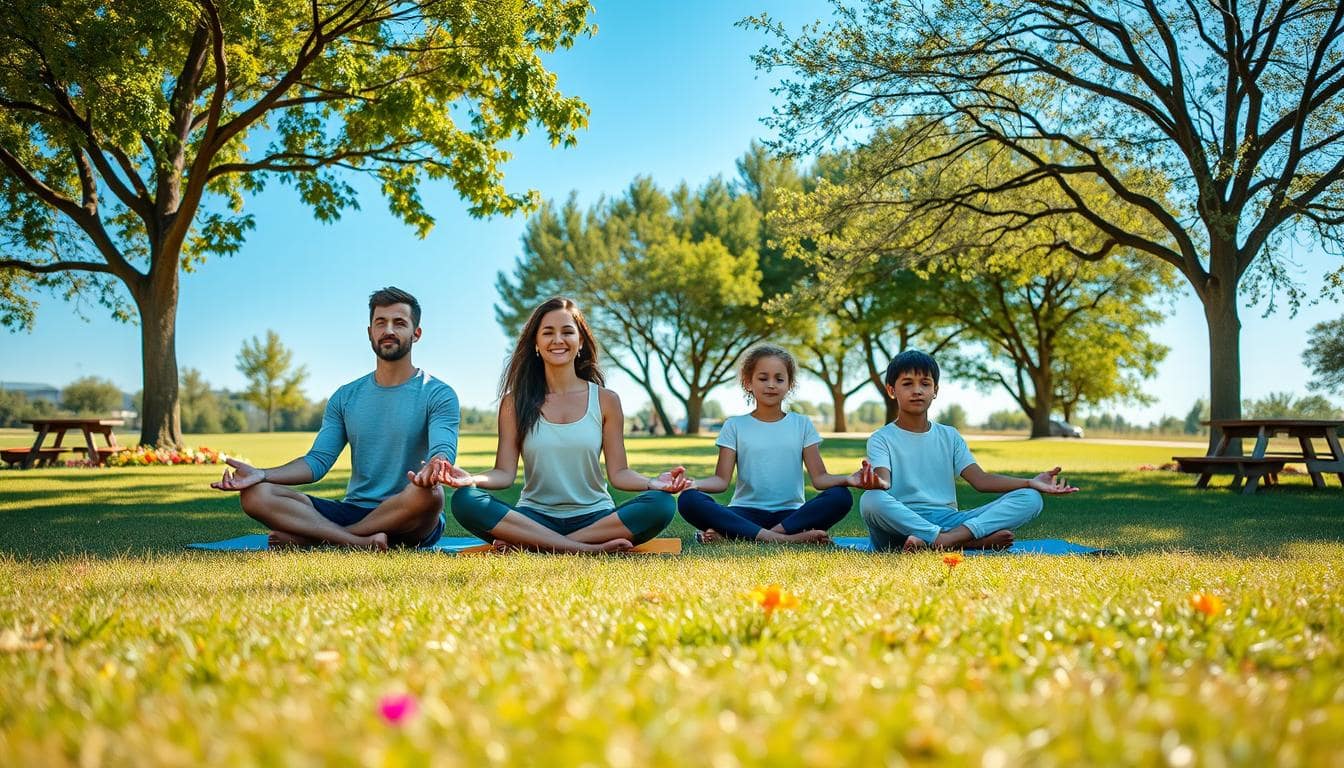
Imagine a free resource right in your community that helps your family feel more centered and connected. That’s the heart of these outdoor classes.
These sessions combine gentle movement, focused breathwork, and the calming presence of nature. They are designed to help both adults and children reset their bodies and minds.
The practice is a powerful tool for mental and physical well-being. Participants often report feeling more calm, focused, and in control after spending time in this setting.
This accessible approach reduces anxiety and improves concentration. It also fosters a deeper connection with your neighbors and the local environment. Everyone can experience the rejuvenating effect and release of daily stress.
At its core, this community offer is a form of moving meditation. It turns a simple park visit into a supportive wellness experience for all ages.
Permits and Sound Rules
Before starting, those leading park yoga classes must deal with permits and sound rules. These steps make sure the activity is safe, well-organized, and respectful of the public space.
Cities usually ask instructors to get a permit or agreement with the local parks department. This ensures your class fits with other park activities and keeps everyone safe. A typical permit lasts from April to November.
Why do we need permits? They help manage the park’s impact and provide legal protection for organizers. This official support turns a casual event into a reliable community resource.
Reservations are also key. Many programs say, “Reservations are required – space is limited.” This prevents overcrowding and helps instructors prepare. People are told to arrive 15 minutes early to check in and set up without stress.
Sound management is also vital. The aim is to keep the atmosphere calm without disturbing wildlife or other park users. Instructors usually speak softly and might use a bell or chime to signal the start and end.
Here are some important sound guidelines for a peaceful park yoga class:
- Use a portable speaker at a low, respectful volume if music is played.
- Avoid amplified microphone systems, which often violate park rules.
- Choose a location away from busy paths.
Permits and sound rules create a structure for yoga in the park to flourish. They balance the freedom of an outdoor session with the responsibility of a shared community asset. This setup makes these free classes enjoyable for all.
Class Formats for Kids and Adults
We know that stress relief is different for everyone. That’s why our park classes have special formats for kids and adults. Each one is made to fit where you are.
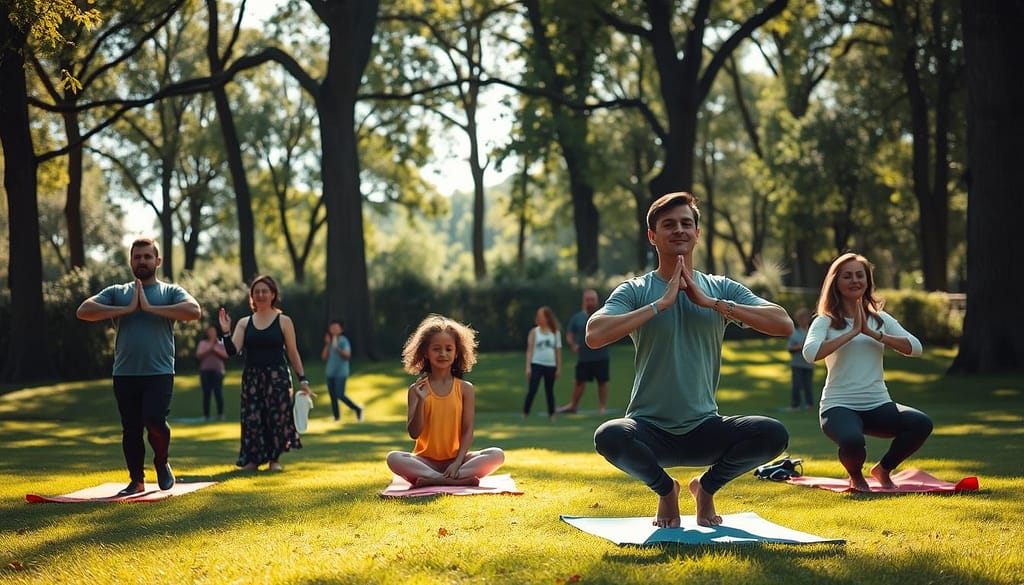
Kids’ classes are fun and interactive. They’re based on full-day camps and use stories to teach yoga. Kids learn poses by acting like animals and practice teamwork with partner poses.
These sessions are short and keep kids engaged. They play “I Spy” to practice being mindful and learn breathing games. A mindful walk at the end helps them notice their surroundings.
Adult classes are different. They last an hour and focus on moving mindfully and breathing deeply. Instructors help with posture and breathing.
These classes end with a quiet meditation. This helps everyone relax and find calm. It’s a special time for adults to unwind and clear their minds.
The table below shows how our classes for kids and adults are different but share the same goal:
| Feature | Kids’ Class Format | Adults’ Class Format |
|---|---|---|
| Primary Focus | Playful engagement & discovery | Alignment, movement & meditation |
| Core Activities | Story-based yoga, partner poses, “I Spy” games | Gentle flow sequences, breathwork, silent sitting |
| Session Duration | Adaptable blocks (30-60 min within camp day) | Standard 1-hour session |
| Desired Outcome | Fun introduction to mindfulness concepts | Deep, restorative personal stress relief |
| Adaptable Elements | Mindful bubble blowing, sensory scavenger hunts | Cloud watching, barefoot walking on grass |
Many activities work for all ages. Things like blowing bubbles, watching clouds, or walking barefoot are great for everyone. They help focus the mind. For more ideas, check out these outdoor mindfulness activities for kids.
Our classes let families enjoy together. Parents relax while kids play. Everyone leaves feeling calm and refreshed in their own way.
Trauma‑Informed Cues and Accessibility
For a free park class to be open to all, instructors must use trauma-informed cues. This approach focuses on presence, making everyone feel safe to explore meditation and mindfulness.
Language is key to creating safety. Instead of commands, instructors use inviting phrases. You might hear, “If you like, gently close your eyes,” or “Perhaps try shifting your weight.” This empowers participants to make choices that feel right for them.
| Aspect | Standard Approach | Trauma-Informed & Accessible Approach |
|---|---|---|
| Language | “Sit up straight.” | “Find a posture that feels supportive for you today.” |
| Physical Practice | Demonstrating one “correct” pose. | Offering seated, standing, or even chair-based options simultaneously. |
| Meditation Anchor | “Focus only on your breath.” | “You can use the breath, sounds around us, or the feeling of the ground.” |
Physical accessibility is built in. The class is open to all levels with modifications available. Wearing comfortable clothing is advised to prevent distraction. The option to remain seated or use a park bench is always valid.

Mindfulness anchors are varied and low-barrier. They draw from simple activities that require minimal instruction. These provide gentle focus points for anyone, even beginners or those feeling overwhelmed.
- Noticing the scent of flowers or grass.
- Stacking or balancing small rocks.
- The simple act of mindful listening becomes a moving meditation.
The ultimate goal is a non-coercive environment. Participants guide their own engagement level. This philosophy is central to quality trauma-informed teacher training, which helps instructors deepen these skills for meditation instruction. In the park, it means every person leaves feeling respected and empowered in their practice.
Weather Plans and Virtual Backups
A key feature of any resilient yoga in the park schedule is a clear policy for weather cancellations and virtual alternatives. Most community programs run from April to November, weather permitting. This means having clear plans in place is essential for keeping families safe and informed.
Organizers typically announce cancellations at least 90 minutes before class starts. They use email, social media, and text alerts. Common reasons to cancel an outdoor session include:
- Steady rain or thunderstorms
- Extreme heat advisories
- Poor air quality from smoke or pollution
- High winds or unsafe ground conditions
This proactive communication prevents wasted trips and shows respect for everyone’s time.
When the park isn’t an option, the practice doesn’t have to stop. Many programs now offer a virtual backup. This often means moving the live session to a Zoom room. A link is sent to all registered participants. Others provide a recorded, guided session you can follow at home.
This adaptability became a lifeline during the pandemic. It proved that the community connection could thrive online. For parents with napping kids or without easy transport, virtual access is a huge benefit. It turns a canceled class into a flexible opportunity.
Having a virtual plan ensures the routine of mindfulness continues. It supports the community’s mental well-being, rain or shine. This resilience is what makes modern outdoor yoga programs so valuable and enduring.
Impact Surveys and Community Stories
People who take outdoor mindfulness classes share their experiences. Organizers use surveys or online reviews to hear from them. This feedback shows how well the classes work for stress relief.
Testimonials give a personal look at the benefits. A.V. says it’s a “Beautiful setting for a relaxing yoga class!” S.S. notes it’s a supportive community space. C.J. says, “Feeling my bare feet on the grass… felt AMAZING!!” These stories highlight the classes’ power to connect and ground us.
The group looks at reviews on sites like Trip Advisor to see how people feel. Sharing your story helps others find this wellness resource. Together, these voices show the program’s success in building well-being and stress relief.