

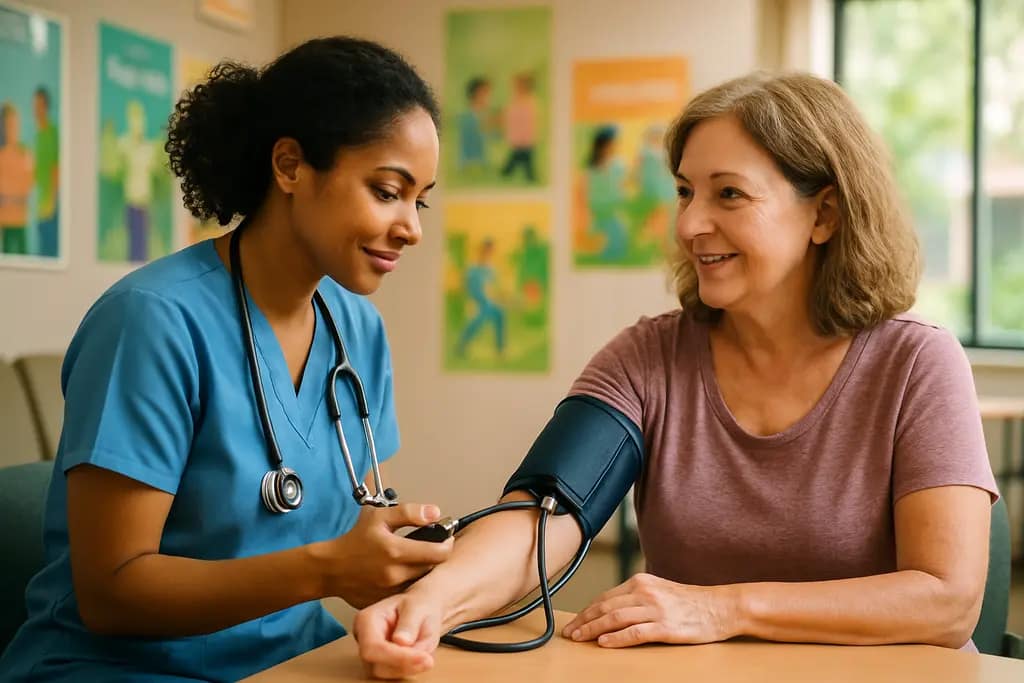
Community health strategies often work best when they connect clinical care, trusted community relationships, education, and longer-term support. USA Health’s Center for Healthy Communities offers a useful case study because its programs do not rely on one setting alone. They include hospital-based intervention, youth mentorship, community health worker training, environmental justice education, and wraparound services for families affected by violence and justice involvement.
As a community wellness educator, I see a clear lesson in that mix: people rarely experience health needs in isolation. A young person may need safety planning, mentoring, school support, family support, and access to qualified care. A family may need practical guidance before it can act on health information. Peer support and group-based education can help create connection, but they should not be asked to replace clinical judgment, crisis services, or social service systems.
Community Health Strategies Start With Local Entry Points
Hospital Contact Can Become A Support Link
USA Health’s Center for Healthy Communities operates a Hospital-Based Violence Intervention Program at University Hospital in Mobile, developed with the City of Mobile and the Mobile County Health Department. The program was funded through the American Rescue Plan Act, spans two years, engages victims of violence during hospital treatment, and connects them with long-term support services, according to the USA Health Center for Healthy Communities. That structure suggests a practical public health idea: a hospital visit after injury may be a point where supportive services can begin, if the program has staff, consent processes, and follow-up capacity.
This does not mean every hospital contact will lead to safer conditions, better mental wellbeing, or changed behavior. Those outcomes depend on many factors outside a medical center’s control, including housing, family stress, neighborhood safety, legal concerns, transportation, school connection, and trust. Still, the model shows why community wellness programs may need to meet people at the moment when help is already being sought, rather than waiting for them to find separate services later.
Why Community Health Strategies Need Clear Boundaries
For community health strategies, the boundary between support and clinical advice matters. A hospital-linked or community-based program can help someone understand available resources, prepare questions, and stay connected to services. It should not diagnose, direct a person to change treatment, or promise that participation will prevent future harm. The most credible programs make their limits visible, especially when they involve young people, trauma exposure, or court involvement.
That same boundary applies to support groups. A well-run peer group may offer connection, shared language, and a steady meeting place. It should not become a substitute for licensed mental health care, medical care, legal advice, or emergency response. Facilitators need a prepared referral process when someone describes immediate danger, severe distress, or needs that exceed the group’s purpose.
Youth Programs Blend Mentoring, Skills, And Accountability
Mentorship Is More Than A Motivational Message
USA Health’s Project Inspire is described as a multi-week hospital-based injury prevention and youth mentorship program. The program includes exposure to the trauma center, career development, Basic Life Support training, and Stop the Bleed training. Its stated aim is to help juvenile offenders understand the consequences of gun violence. The lesson is not that a single program can resolve youth violence. A more cautious reading is that repeated contact, practical skills, adult guidance, and direct education may give participants more structured ways to discuss risk and responsibility.
The Building Safer Communities Collaborative also serves justice-impacted youth ages 12 to 18 and their families in Mobile County. It is described as a six-month intervention with weekly community service hours, wraparound support addressing social determinants of health, mental health and art therapies, mediation, and spiritual care. That mix reflects a wider view of wellness, where emotional distress, family pressure, community harm, and opportunity gaps may overlap.
From a support-group perspective, the family component stands out. Young people often return to households and peer networks that shape daily choices. Programs that include families may be better positioned to discuss communication, conflict, grief, school pressure, and practical barriers. Even then, expectations should remain careful: participation may support connection and learning, but it should not be presented as a guaranteed path to behavior change.
Training Community Connectors Builds Practical Capacity
Community Health Workers Can Bridge Systems
USA Health offers a 12-week Community Health Worker training program that combines online and in-person classes with site placements. Training topics include chronic disease prevention, mental health first aid, and advocacy. Community health workers are then positioned as bridges between underserved communities, health systems, and health departments. This is a useful lesson for community health strategies because information alone is often not enough; people may also need help understanding where to go, what to ask, and how to follow through.
Health literacy grows through repetition, trust, and access to plain language. Community health workers can support that process when they are trained, supervised, and connected to reliable referral pathways. The cautious part is just as important: a community health worker is not a replacement for a clinician. Their strength is connection, education, and practical guidance within their role.
For readers exploring wellness education within the network, EKKO Naturals is another key site. For local program design, HealthScope has also discussed how health discussions at local events can be more useful when organizers set clear limits and connect people with appropriate care.
Funding And Research Shape What Programs Can Test
Public Funding Creates Time For Follow-Up
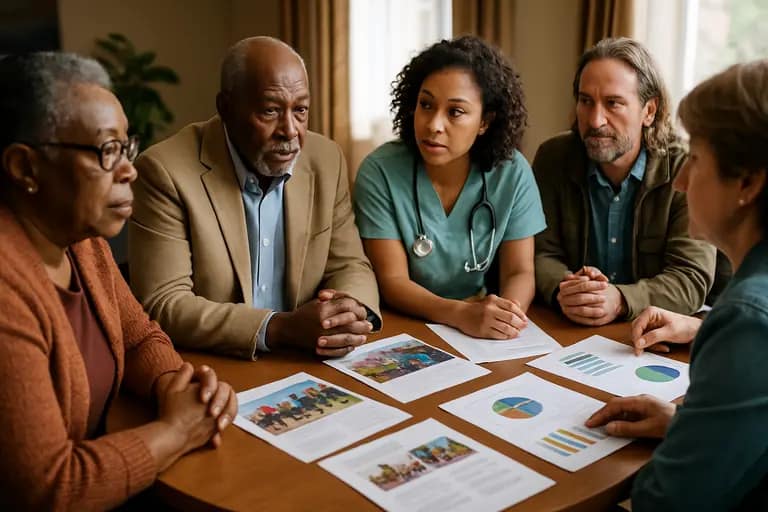
USA Health received $1 million in state funding in 2025 to launch a public health initiative focused on reducing gun violence among high-risk and court-involved youth in Mobile County. The City of Mobile also contributed $750,000 to fund the Hospital-Based Violence Intervention Program at USA Health University Hospital, according to the University of South Alabama President’s Report 2024-2025. Those figures matter because short, underfunded projects may struggle to provide follow-up, staffing, evaluation, and coordination across agencies.
The President’s Report also describes USA Health as using trauma surgeons and related specialists in preventive public health roles, particularly in gun violence initiatives, and frames violence alongside chronic conditions such as diabetes and hypertension. That framing may help institutions treat violence prevention as a repeated, system-level public health concern rather than as an isolated emergency department event. It should still be handled carefully, since violence is shaped by social, economic, legal, family, and community conditions as well as health system response.
USA Health’s Center also pursues research on health disparities, trauma, social determinants, childhood trauma, burn care for hypertrophic scars, and long-term effects of injury. Research activity does not prove that every program is effective, but it can help define questions, measure outcomes, and revise programs when results are limited or mixed.
Education Pipelines Make Wellness A Long-Term Project
Student Programs Link Opportunity And Health Literacy
The STEMM Scholars for Environmental Justice program runs annually as a five-week summer initiative for 11th and 12th graders in Mobile County and selected academies. It combines STEMM education with field trips and mentored community research projects on environmental justice, with rewards and incentives for students. USA Health also operates S.T.A.R.S. and S.T.R.I.P.E.S. programs for high-school students interested in healthcare careers. S.T.A.R.S. is a four-week summer enrichment program in math and science, while S.T.R.I.P.E.S. is a six-week internship focused on health sciences, tutoring, community service, and health advocacy.
These programs suggest that community wellness can include career exposure and student research, not only clinical services. When young people learn how health, environment, advocacy, and science connect, they may gain language for community concerns that otherwise stay abstract. The evidence provided here supports the program structure, not claims about long-term career outcomes or community health changes.
- Programs should define what support staff can and cannot do.
- Mentorship should include referral routes for needs beyond the program.
- Digital tools may help participation, but limited electronic access can remain a barrier for underserved groups.
- Evaluation should be planned early, not added after the program ends.
USA Health Community Health Strategies In Practice
USA Health’s programs point toward a careful, grounded model: start where people already encounter systems, build trust through trained connectors, include families when appropriate, and support youth with education rather than one-time messaging. The most useful community health strategies appear to be those that combine structure with humility. They recognize trauma, violence, chronic disease risk, environmental concerns, and health literacy as connected issues, while avoiding claims that any single program can solve them alone.
For individuals and families, the practical next step is not to treat a community program as medical advice. If a program raises concerns about mental health, injury recovery, chronic disease, medication, trauma symptoms, or safety, discuss those concerns with a clinician, licensed mental health professional, school counselor, social worker, or local emergency resource as appropriate. Good community support can open the door, but qualified care should guide personal health decisions.